Fitbod review (2026)
Generates workouts around your equipment and recovery.
Editorial score
4.1 / 5
Price
From $12.99/mo (cheaper annually)
Platforms
iOS, Android, Apple Watch
Best for
generated workouts around your available equipment
Free tier / trial
Short trial, then subscription
Last checked
June 6, 2026
At a glance
Fitbod review summary
| Verdict | Fitbod is worth it for lifters who want generated, equipment-aware sessions. Skip it if you mainly need a cheap logbook, a social feed, or coach-like explanations for long-term progression. |
|---|---|
| Best for | generated workouts around your available equipment |
| Not for | conversational coaching, social accountability, or a full strength block |
| Price | From $12.99/mo (cheaper annually) |
| Free tier / trial | Short trial, then subscription |
| Platforms | iOS, Android, Apple Watch |
| Apple Watch | Yes |
| Offline use | partial |
Is Fitbod worth it?
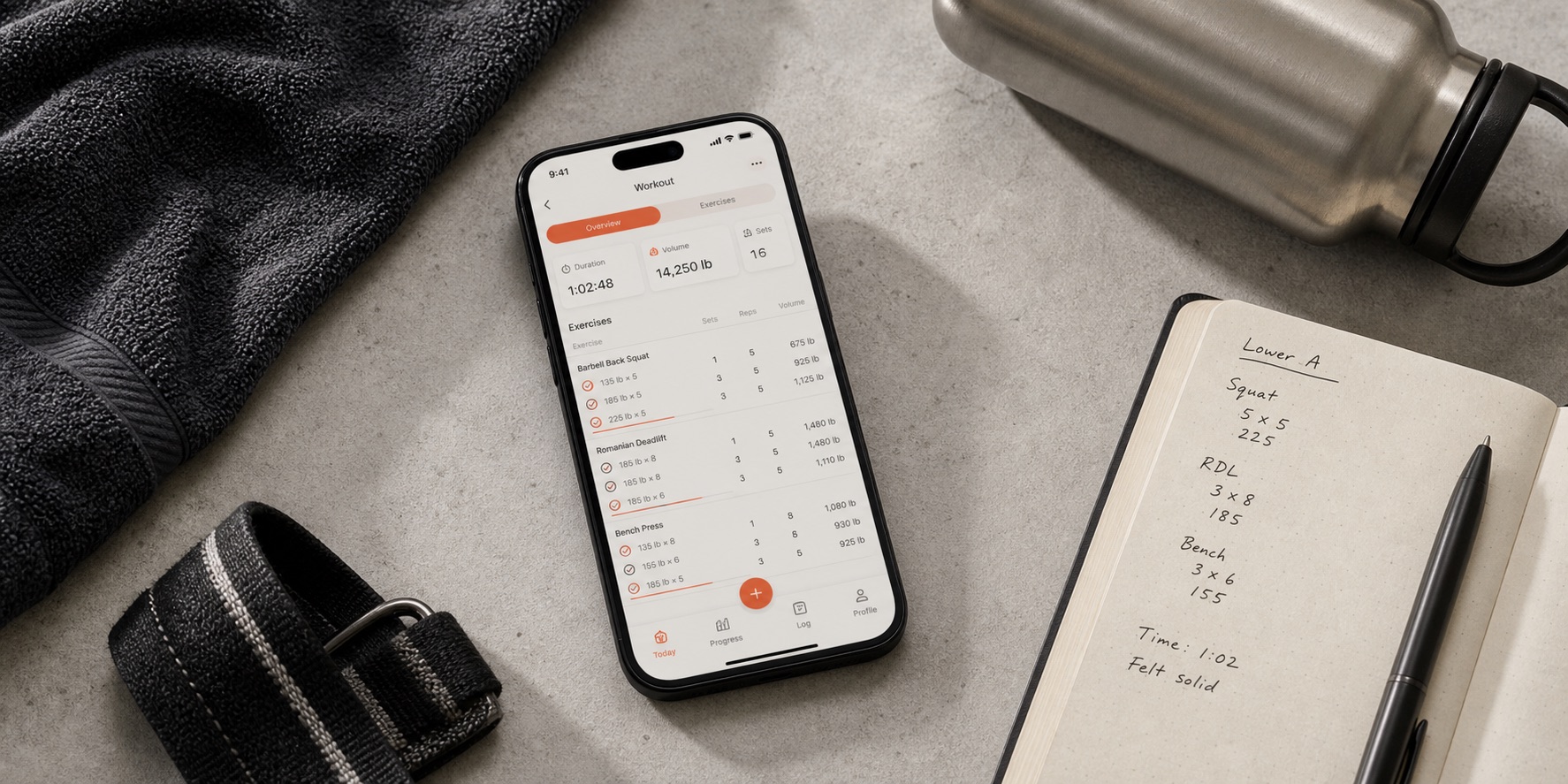
Fitbod is strongest when the immediate question is what workout to do today. You tell it your available equipment, training history, and muscle-recovery state, then it generates a session you can follow on phone or Apple Watch. That makes it genuinely useful for variable gyms, travel, hotel gyms, or lifters who hate building routines from scratch.
The tradeoff is that Fitbod is better understood as a workout generator than a long-term strength coach. It can suggest exercises, sets, reps, and session structure, but the product is less focused on explaining a full training block, talking through stalled lifts, or giving conversational reasoning from your own workout history.
For strength training, Fitbod is worth it if convenience beats control. If you already have a program from a coach, spreadsheet, or proven template, a manual tracker like Hevy or Strong may be better value. If you want generated sessions and are comfortable paying after the trial, Fitbod is one of the more established options.
Best for
generated workouts around your available equipment
Not ideal for
conversational coaching, social accountability, or a full strength block
Official evidence checked
Pricing, platform, and feature claims are checked against official product sources and app-store listings where available.
Who this is for
Fitbod makes the most sense when its core job matches how you actually train. We look at whether the app is a logbook, a workout generator, a program library, or a coaching product, because those are very different decisions once you are standing on the gym floor.
People who want sessions generated, not planned
Lifters in gyms with variable machine equipment
Anyone who hates building their own routines
What it feels like in a real workout
Fitbod's main workflow starts before the workout. You choose your equipment, training goal, experience level, and muscle-recovery preferences, then the app suggests a session. In a normal commercial gym this is convenient: if a cable station or machine is busy, Fitbod is better suited to replacing the movement than a pure logbook.
During the workout, Fitbod works best when you accept the generated structure and make small edits as needed. It is less satisfying if you already know the exact program you want to run, because the product is trying to help decide the workout rather than simply record your plan. Apple Watch support makes it practical on the floor, while the official offline help page is worth checking because offline behavior is more limited than a simple local-first logbook.
After the workout, the useful part is the next-session recommendation loop: Fitbod can use training history, muscle recovery, and equipment settings to shape future sessions. The limitation is explanation depth. It can generate and adjust sessions, but it is not the same thing as a conversational coach explaining why a lift stalled or how to run a multi-week strength block.
Fitbod pros and cons
Strengths
- Fast, equipment-aware workout generation
- Good handling of machine-based gyms
- Polished muscle-recovery visuals
- Widely reviewed and established
Trade-offs
- Generator first, not a conversational coach
- More session-focused than block-focused
How Fitbod fits into a training week
A workout app can look strong in a feature table and still fail once training gets messy. We look at how Fitbod handles four normal moments: planning before you arrive, logging while you are resting between sets, deciding what should change next week, and reviewing whether the app is actually helping you train more consistently.
Before the workout
The setup flow should make the next session obvious. For Fitbod, that means judging whether its core workflow (ai workout generator) matches the user who is choosing it: generated workouts around your available equipment.
During the workout
Rest periods are short, so every extra tap matters. We give more credit to apps that keep set entry, substitutions, exercise history, watch use, and offline behavior calm under normal gym pressure.
After the workout
The useful question is whether the app converts a completed session into a better next session. Some apps mainly preserve history; others generate workouts or coach progression.
Longer-term fit
We also weigh whether the pricing, free tier, and platform support make sense after the novelty wears off. Fitbod is less ideal for conversational coaching, social accountability, or a full strength block, even if the headline feature list looks attractive.
How Fitbod scored in testing
Our methodology gives more weight to the parts of a workout app that matter during strength training: setup, logging speed, progression support, workout-floor reliability, pricing clarity, and whether the app helps you make better decisions after the session.
How we picked and tested
We score workout apps through the lens of strength training, not general wellness. The main criteria are whether an app can help you plan training, log sets quickly, progress loads or reps over time, and stay reliable on phone or watch while you train.
We also separate official product claims from editorial judgement. Pricing, platforms, and feature availability are checked against official sources where possible, while the score is our view of how useful the app is for lifters choosing between loggers, generators, program libraries, and coaching tools.
Why you should trust this review
This review is written for lifters comparing real training workflows, not for a generic app directory. We surface where Fitbod is genuinely strong, where another app may be a better fit, and which claims should be rechecked at publish time because pricing, platform support, and free-tier limits can change.
Fitbod pricing
Pricing changes often, so treat this as a snapshot.
Price
From $12.99/mo (cheaper annually)
Free tier
Short trial, then subscription
Fitbod alternatives
If Fitbod is not the right fit, these are the closest options for different priorities.
| Alternative | Best for | Price | Why choose it over Fitbod |
|---|---|---|---|
| Hevy | self-programmed lifters who want fast logging and friends | Free; Hevy Pro $23.99/yr | The default free logbook for self-programmed lifters. Choose it when you already know your plan and just want a clean place to record it. |
| Alpha Progression | lifters who want progression rules, training plans, and detailed strength tracking | Free; Pro subscription | A strong specialist for progression-minded lifters. Choose it when you want a planning and analytics tool more than a social logbook. |
| Strong | experienced lifters who want quiet, reliable logging | Free (limited); Pro $29.99/yr or lifetime | A great minimal logbook, especially on Apple Watch. Choose it when you want the interface to get out of the way, not coach you. |
| StrengthLog | people who want a free, strength-specific tracker | Free; Premium subscription | One of the safest free-first picks for strength tracking. Choose it when budget and strength focus matter more than AI coaching. |
Frequently asked questions
Is Fitbod worth it?
Is Fitbod free?
Is Fitbod good for beginners?
What is the best Fitbod alternative?
Sources
- 01 Fitbod App Store listing (iOS, Apple Watch, ratings, and in-app purchase reference) apps.apple.com/us/app/fitbod-gym-fitness-planner/id1041517543
- 02 Fitbod Google Play listing (Android availability) play.google.com/store/apps/details
- 03 Fitbod Apple Watch help (watch support) help.fitbod.me/hc/en-us/articles/360006499194-Apple-Watch
- 04 Fitbod offline help (offline-use limitations) help.fitbod.me/hc/en-us/articles/360006572594-Can-I-use-Fitbod-without-an-internet-connection
- 05 Garage Gym Reviews Fitbod review (independent review context) garagegymreviews.com/equipment/fitbod
- 06 Lifehacker Fitbod review (independent editorial context) lifehacker.com/health/fitbod-app-review
- 07 Fitbod subreddit (community feedback themes) reddit.com/r/fitbod/
Want coaching, not just tracking?
Brace AI writes the plan, tracks the workout, and explains what to change next when a basic logbook is not enough.