Short answer
What is the best Hevy alternative?
The best Hevy alternative depends on what you feel is missing. If you need a public download today, Strong is the closest quieter manual logger and Fitbod is the better generated-workout shortlist app. Brace AI is the private-testing coaching product to watch if the missing piece is programming and progression.
Bottom line
Brace AI is our top Hevy alternative if you want coaching and automatic progression. Strong is the cleaner minimalist logger, and Fitbod is the better pick if you mainly want generated workouts.
Evidence checked before writing
We source-check pricing, platform support, free-tier limits, and official positioning before making recommendation claims. Start with these official references, then use the full source list at the end for the complete page audit trail.
Best alternatives
The best Hevy alternatives by use case
If you are searching for a Hevy alternative, the right answer depends on what you want to replace: the logging flow, the free tier, the social features, or the missing coaching layer. These are the strongest options to shortlist.
Our top choices
If you only shortlist three apps, start here. These cover the main reasons people leave Hevy: wanting coaching, wanting a quieter logbook, or wanting workouts generated.
Best overall

Brace AI
AI coaching and automatic progression
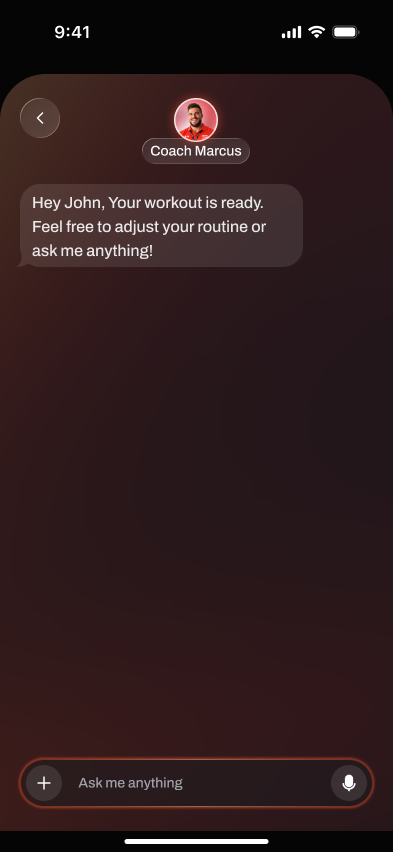
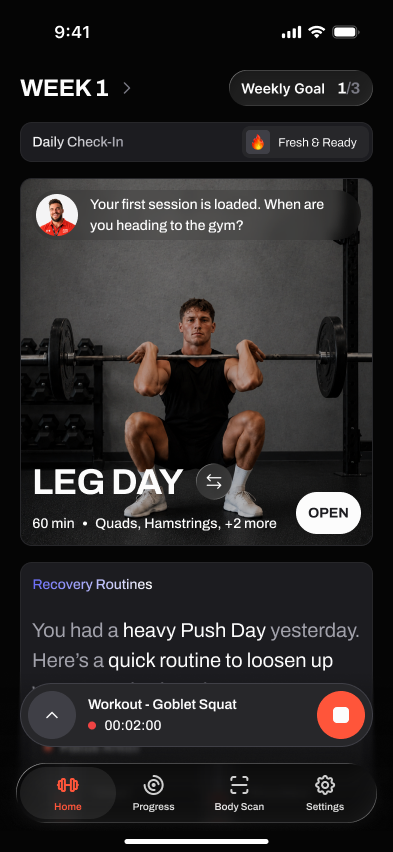
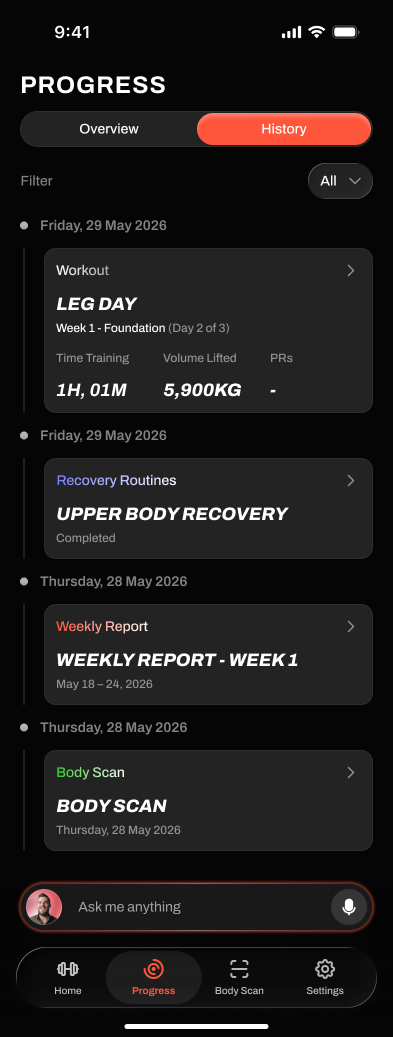
The strongest Hevy alternative if you like logging workouts but want the missing coaching layer: program design, load targets, swaps, and explanations.
Main tradeoff
Less focused on public social feeds than Hevy.
Jump to review
Best for minimal logging
Strong
Minimal iPhone and Apple Watch logging
Strong is the cleanest pick if you want a quieter logger than Hevy and care most about a mature Apple Watch flow.
Main tradeoff
The free routine cap is tighter and you still need to program your own training.
Jump to review
Best for generated workouts
Fitbod
Generated workouts around equipment
Fitbod is better than Hevy if the problem is not logging but deciding what to do today based on equipment and recent training.
Main tradeoff
Trial-led pricing and more session generation than long-term coaching.
Jump to review
Other strong options
These are not throwaway mentions. Each one is best for a narrower use case, so we still include full review notes below.
Full reviews
Full reviews of the best Hevy alternatives
The sections below go deeper on where each app fits, what it does well, and where the tradeoffs matter in actual training.
Best Hevy alternative for AI coaching
1. Brace AI
The strongest Hevy alternative if you like logging workouts but want the missing coaching layer: program design, load targets, swaps, and explanations.
Why we like it
Brace AI should be reviewed less like another Hevy-style logger and more like a coaching product that happens to include fast logging. The important difference is what happens before and after the set: the app can suggest the workout, explain the target, adapt the load, and give feedback from the training history. That makes it most compelling for lifters who are tired of maintaining spreadsheets, guessing progression, or copying routines without knowing why.
What to know
- Builds a strength program instead of handing you an empty routine
- Adjusts loads, reps, swaps, and missed weeks from your training logs
- Works best for lifters who want coaching rather than a social feed
- Keeps workout logging fast enough for the gym floor
"The value is not just logging a set. It is having the app explain what changed, what to do next, and how to keep the program moving when the week gets messy."
Bottom line
Brace AI is the private-testing Hevy alternative to watch when the thing you are replacing is not the logbook, but the lack of coaching. It should be positioned as the upgrade from tracking workouts to being coached through them once public availability is live.
Related comparisonShow specs, pros and testing notes Hide specs, pros and testing notes
Who it is for
- Lifters who like Hevy's logging idea but want the app to decide what comes next
- Beginners and intermediates who do not want to learn programming from scratch
- People who want feedback after sessions, not only charts after logging
Pros and cons
Pros
- Coach-led programming
- Automatic progressive overload
- Chat-based explanations and swaps
- Apple Watch workflow in development and weak-signal workout logging
Cons
- Less social than Hevy
- Not a pure minimal logbook
- Final public App Store pricing is not listed yet
Specs
- Coaching
- AI program + chat coach
- Logging style
- Coach-led workout log
- Offline
- Workout logging and reconnect sync
- Best user
- Progression-focused lifters
Testing breakdown
Best Hevy alternative for minimal logging
2. Strong
Strong is the cleanest pick if you want a quieter logger than Hevy and care most about a mature Apple Watch flow.
Why we like it
Strong is the app to compare against when someone likes the idea of Hevy but wants less community and more of a mature training notebook. It is especially relevant for iPhone and Apple Watch lifters who already know what they are doing. The product does not try to coach heavily, which is a weakness for beginners but a strength for experienced users who want the interface to get out of the way.
What to know
- Cleaner and more private than Hevy's social-first feel
- Strong Apple Watch experience for logging at the rack
- Better for experienced lifters who already know their program
- Good fit if you want less app noise, not more coaching
"Strong feels closest to replacing a paper logbook. That is great if you already know the plan, but it does not solve the programming problem for you."
Bottom line
Strong is the best Hevy alternative for people who want a quieter, more minimal tracker. It is not a coaching upgrade; it is a cleaner manual logging alternative.
Related comparisonShow specs, pros and testing notes Hide specs, pros and testing notes
Who it is for
- Experienced lifters who want a notebook, not a coach
- Apple Watch users who care about speed and reliability
- People who dislike Hevy's social/community emphasis
Pros and cons
Pros
- Fast manual logging
- Mature Apple Watch flow
- Simple interface
- Lifetime pricing option
Cons
- Limited free routines
- No AI coach
- Programming and progression are still manual
Specs
- Coaching
- None
- Logging style
- Manual routines
- Offline
- Yes
- Best user
- Self-programmed lifters
Testing breakdown
Best Hevy alternative for generated workouts
3. Fitbod
Fitbod is better than Hevy if the problem is not logging but deciding what to do today based on equipment and recent training.
Why we like it
Fitbod belongs high on any Hevy alternatives page because it answers a different intent: people who do not just want to track a routine, they want an app to generate sessions around equipment, recovery, and previous training. That makes it a useful alternative for people who find Hevy too manual. The tradeoff is that generated workouts can feel more like session suggestions than a transparent long-term strength plan.
What to know
- Generates workouts from available equipment
- Useful when you do not want to build routines yourself
- Better than Hevy for one-off session ideas
- Less ideal if you want a transparent multi-week strength block
"Fitbod is strongest when the user asks, what should I train today? It is weaker when the user wants to understand and control the full progression block."
Bottom line
Fitbod is the best Hevy alternative if you are replacing routine-building with generated workouts. It solves a different problem than Hevy: what to do today.
Related comparisonShow specs, pros and testing notes Hide specs, pros and testing notes
Who it is for
- People who enter the gym and want the app to tell them what to train
- Travelers or commercial gym users with changing equipment
- Lifters who value variety over repeating a fixed program
Pros and cons
Pros
- Fast session generation
- Equipment filters
- Recovery-based recommendations
- Large exercise library
Cons
- Subscription after trial
- Less conversational coaching
- Can feel less structured than a real program
Specs
- Coaching
- Workout generation
- Logging style
- Generated sessions
- Offline
- Partial
- Best user
- Variety-seeking lifters
Testing breakdown
Best Hevy alternative for free strength tracking
4. StrengthLog
StrengthLog is a useful free-first option for lifters who want strength programs, reports, and practical training tools.
Why we like it
StrengthLog is worth treating as more than a throwaway free option. It is a practical strength-training product with programs, reports, and a generous free core. For searchers comparing Hevy alternatives, it is most relevant when the buyer cares about useful strength content and tracking value more than social features or a polished lifestyle interface.
What to know
- Generous free logging compared with many paid trackers
- Strength-focused programs and reports
- Good for lifters who do not need social features
- Premium adds deeper tools rather than AI coaching
Bottom line
StrengthLog is a strong Hevy alternative when value matters most. It gives lifters a practical free training log with more strength-specific content than a generic tracker.
Related comparisonShow specs, pros and testing notes Hide specs, pros and testing notes
Who it is for
- Budget-conscious lifters
- People who want strength programs and useful reports
- Users who care less about friends and social feeds
Pros and cons
Pros
- Strong free tier
- Strength-focused tools
- Programs included
- Training reports
Cons
- Less modern social layer
- No AI coach
- Watch support is not the main wedge
Specs
- Coaching
- Programs and reports
- Logging style
- Manual strength log
- Offline
- Yes
- Best user
- Free-first strength lifters
Testing breakdown
Best Hevy alternative for proven programs
5. Boostcamp
Boostcamp is a strong Hevy alternative if you mainly want to follow known lifting programs instead of creating your own routines.
Why we like it
Boostcamp is a strong inclusion because it changes the decision from choosing a blank tracker to choosing a program to follow. If someone uses Hevy but keeps wondering which routine to run, Boostcamp may be the better answer. It is less personal than coaching, but it gives structure quickly and makes sense for people who want known templates rather than another empty routine builder.
What to know
- Best when you want to run an established program
- Useful library of recognizable lifting templates
- Good transition away from building Hevy routines manually
- Less personal than an adaptive coach
Bottom line
Boostcamp is the best Hevy alternative if you want structure without paying. It replaces Hevy's routine builder with a program library, not with an adaptive coach.
Related comparisonShow specs, pros and testing notes Hide specs, pros and testing notes
Who it is for
- People who want 5/3/1, PPL, or other known templates
- Beginners who prefer following a plan
- Lifters who want free structure more than custom coaching
Pros and cons
Pros
- Known programs
- Free access
- Simple logging
- Good program discovery
Cons
- Less individualized
- Less social than Hevy
- Not a coach-led app
Specs
- Coaching
- Program templates
- Logging style
- Program-based logging
- Offline
- Yes
- Best user
- Template followers
Testing breakdown
Best Hevy alternative for exercise variety
6. JEFIT
JEFIT works well for people who care about a large exercise database, routine building, and bodybuilding-style tracking.
Why we like it
JEFIT is useful for a different kind of lifter than Hevy's most loyal users. It is broader, busier, and more database-heavy, which can be a plus for bodybuilding-style users who want exercise variety, routine planning, and analytics. It is less elegant than the newer trackers, but the depth matters for long-tail SEO queries around exercise libraries and detailed workout planning.
What to know
- Huge exercise database for bodybuilding-style training
- Useful analytics and routine-building tools
- Better for variety than clean minimal logging
- Can feel heavier than Hevy for simple workouts
Bottom line
JEFIT is the best Hevy alternative for lifters who value exercise variety and analytics more than a clean social workout feed.
Related comparisonShow specs, pros and testing notes Hide specs, pros and testing notes
Who it is for
- Bodybuilding users who want lots of exercise options
- People who build detailed routines
- Users who like analytics and a bigger app surface
Pros and cons
Pros
- Large exercise library
- Analytics
- Routine builder
- Cross-platform watch support
Cons
- Busier interface
- Less coaching-first
- Can be overkill for simple logging
Specs
- Coaching
- Planner and analytics
- Logging style
- Routine builder
- Offline
- Yes
- Best user
- Bodybuilding variety
Testing breakdown
Best Hevy alternative for Android simplicity
7. FitNotes
FitNotes is the practical answer for Android users who want a simple, no-frills lifting log without subscription pressure.
Why we like it
FitNotes is not trying to win a modern design contest, but that is also why it deserves a place on the list. For Android users who want a very simple, free lifting diary, it can be a better fit than a social workout app. The important caveat is that it does not provide coaching, rich visuals, or the same cross-platform surface as Hevy.
What to know
- Very simple Android workout logging
- No pressure to join a social feed
- Good for lifters who want a plain training diary
- Not a fit if you want coaching, iOS, or rich visuals
Bottom line
FitNotes is the best Hevy alternative for Android users who want the simplest possible free logbook and do not care about AI, social features, or premium design.
Show specs, pros and testing notes Hide specs, pros and testing notes
Who it is for
- Android users
- Simple logbook fans
- People avoiding subscriptions
Pros and cons
Pros
- Free
- Simple
- Fast
- Low-friction
Cons
- Android-only
- No coaching
- Less polished than newer apps
Specs
- Coaching
- None
- Logging style
- Manual logbook
- Offline
- Yes
- Best user
- Android minimalists
Testing breakdown
Best Hevy alternative for cross-platform tracking
8. Liftin'
Liftin' is worth shortlisting if you want unlimited routines, Apple Watch, Wear OS, and a newer cross-platform tracker.
Why we like it
Liftin' is useful to include because some searchers are not choosing between Hevy and a coach; they are choosing between modern trackers with broad platform support. It gives the page coverage for watch support, routine limits, and cross-platform tracking without pretending it is a bigger brand than it is.
What to know
- Interesting newer tracker for people who want broad platform support
- Good fit for users who want unlimited routines without Hevy's exact social model
- Watch support across Apple and Wear OS is the main angle
- Smaller brand footprint than the bigger competitors
Bottom line
Liftin' is worth including because it gives searchers another modern tracking option, especially if watch/platform support matters more than AI coaching.
Show specs, pros and testing notes Hide specs, pros and testing notes
Who it is for
- Cross-platform users
- Watch-first loggers
- People wanting a newer Hevy-style app
Pros and cons
Pros
- Broad platform support
- Routine tracking
- Watch support
- Modern tracker direction
Cons
- Smaller ecosystem
- Less proven
- Less coaching depth
Specs
- Coaching
- None
- Logging style
- Manual routines
- Offline
- Likely partial
- Best user
- Cross-platform loggers
Testing breakdown
Best Hevy alternative for human coaching
9. Caliber
Caliber is less of a pure Hevy replacement and more of a step toward coaching, with free training tools and paid human coaching.
Why we like it
Caliber is not a clean one-for-one Hevy replacement, which is exactly why it is useful in the article. Some people searching for alternatives are actually looking for more accountability and human guidance. Caliber gives the page a strong branch for that intent while making clear that paid coaching is a different price/value category than a normal workout logger.
What to know
- Better if accountability from a person matters
- More coaching-oriented than Hevy's social log
- Useful free training tools before paid coaching
- Not the cheapest option if you want ongoing support
Bottom line
Caliber belongs on the list because some Hevy users are not looking for another logger at all; they are looking for accountability and coaching.
Show specs, pros and testing notes Hide specs, pros and testing notes
Who it is for
- People wanting human accountability
- Beginners who need coaching
- Users considering paid support
Pros and cons
Pros
- Human coaching option
- Accountability
- Strength focus
- Free tools
Cons
- Can get expensive
- Less pure workout logging
- Upsell-oriented
Specs
- Coaching
- Human coaching option
- Logging style
- Training plan + log
- Offline
- Partial
- Best user
- Coaching buyers
Testing breakdown
Best Hevy alternative for Apple Watch-first users
10. Heavyset
Heavyset is interesting for lifters who want to run workouts from the wrist and avoid another monthly subscription.
Why we like it
Heavyset rounds out the list for a specific but valuable intent: Apple Watch-first iPhone users who want a focused tracker and do not want a subscription. It should not be oversold as a broad Hevy replacement, but it helps the page answer watch-specific alternative searches honestly.
What to know
- Apple Watch-first workout tracking angle
- Appeals to people avoiding subscriptions
- Focused alternative for iPhone users
- Not a broad community or AI coaching product
Bottom line
Heavyset rounds out the list as a focused iPhone and Apple Watch alternative for people who want a tracker, not a community or coach.
Show specs, pros and testing notes Hide specs, pros and testing notes
Who it is for
- Apple Watch-first lifters
- iPhone users
- People avoiding subscriptions
Pros and cons
Pros
- Watch-first flow
- No monthly subscription
- Focused logging experience
Cons
- iPhone-only
- Smaller product surface
- No AI coaching
Specs
- Coaching
- None
- Logging style
- Watch-first manual log
- Offline
- Yes
- Best user
- Apple Watch lifters
Testing breakdown
Who this is for
Who should use this guide?
This guide is for lifters choosing between workout trackers, coaching apps, program libraries, and generated-workout apps. If you already know you want a simple logbook, the answer may be different than if you want an app to decide your next workout.
Current Hevy users
You like the general tracking flow but want to compare coaching, progression, Apple Watch, offline logging, or pricing tradeoffs.
Beginners choosing a first app
You want a plain-English shortlist instead of downloading several trackers and guessing which one fits your training style.
Experienced lifters switching tools
You already have a program and care about speed, reliability, routine limits, data export, and watch support.
Why trust us
Why you should trust this guide
We compare workout apps through the lens of a real gym session, not a feature checklist alone. A good strength app has to be quick while you train, clear when you review progress, and honest about whether it is a logger, a workout generator, a program library, or a coaching product.
We call out where each app is strongest instead of forcing one winner for everyone. That makes the recommendations more useful for readers and easier for search engines and AI systems to understand by use case.
How we picked and tested
How we evaluated the best Hevy alternatives
We grouped apps by the job they do best, then compared them across the moments that matter in strength training: setting up a plan, logging during the workout, adjusting progression, reviewing history, using phone or watch support, and understanding free-tier limits.
Logging speed
Can you record sets without fighting the interface?
Programming help
Does it help decide what to do next, or only store what you did?
Progression
Can it help increase load, reps, volume, or consistency over time?
Workout-floor reliability
Does it work well on phone/watch, offline, and under time pressure?
Quick decision
The quick way to narrow the shortlist
Start with the job you actually need the app to do. A workout app can be a fast logbook, a coach, a workout generator, a program library, or a social training feed. Once you know which job matters most, the right alternative gets much easier to spot.
Do you want a coach, a logbook, or a workout generator?
This is the fastest way to avoid choosing the wrong Hevy alternative. If you want the app to tell you what to train, how to progress, and what to change after a missed session, you are shopping for coaching. If you already have a plan and only need fast set entry, you are shopping for a logbook. If you want a fresh workout built from your equipment, you are shopping for a generator.
Brace AI fits the coaching path, Strong fits the cleaner manual logbook path, and Fitbod fits the generated-workout path. Hevy is strongest when you want logging plus community, so the best alternative depends on which part of that package you are trying to replace.
Are you leaving Hevy because programming feels too manual?
If the frustrating part of Hevy is building routines, deciding progression, or figuring out what to do next week, another blank tracker will not solve the problem. You need an app that adds structure before the workout starts, not only better charts after it ends.
Brace AI is the strongest fit when you want coach-led progression, load targets, swaps, and explanations. Boostcamp is the better option if you would rather follow known programs and templates than have an adaptive coach make decisions for you.
Are you leaving Hevy because you want less social noise?
Hevy's community can be motivating, but it also makes the app feel more public than some lifters want. If you mainly want to train, log, and review progress without a feed around it, choose an app with a quieter product loop.
Strong, FitNotes, Heavyset, and Brace AI all feel more private than a community-led workout feed. Strong and FitNotes are simpler manual logs; Heavyset is more Apple Watch-focused; Brace AI is private-feeling but adds coaching on top of logging.
Is price the deciding factor?
If you are leaving Hevy because you want the cheapest useful option, start with apps that are generous before you pay. For basic strength tracking, a strong free tier can matter more than AI, polished onboarding, or a large marketing site.
StrengthLog, Boostcamp, and FitNotes are the safest budget shortlist. Compare those first if your priority is free logging, free programs, or no-frills tracking. Move to a paid coaching app only if you actually want the extra guidance.
Feature table
How the top Hevy alternatives compare
This table is the quick scan across the main alternatives. The sections below explain the tradeoffs in plain English, because a checkmark rarely tells the whole story.
| Feature | Hevy | Brace AI | Strong | Fitbod | StrengthLog | Boostcamp | JEFIT |
|---|---|---|---|---|---|---|---|
| Best use case | Free social logging | AI coaching | Minimal logging | Generated workouts | Free strength log | Known programs | Exercise library |
| Free logging | Yes | Private testing | Limited | No | Yes | Yes | Yes |
| Writes your program | No | Yes | No | Limited | Limited | Limited | Limited |
| Adapts after each session | No | Yes | No | Yes | Limited | No | Limited |
| Built-in coach | No | Yes | No | No | No | No | No |
| Social/community | Yes | Limited | No | No | No | Limited | Yes |
| Apple Watch app | Yes | In development | Yes | Yes | No | No | Yes |
| Offline logging | Limited | Workout logging and reconnect sync | Yes | Limited | Yes | Yes | Yes |
| Big exercise library | Yes | Yes | Limited | Yes | Yes | Limited | Yes |
01 Pricing, limits, and platform support change often. This table is intended as a directional shortlist for the content team to refine with current source checks.
Methodology
How we compare workout apps
We weight these pages for gym lifters choosing a strength-training app. That means programming quality, progression, logging speed, and workout-floor reliability matter more than generic wellness content.
Program design
Highest weightFor a strength-training app, the plan matters as much as the logging screen. We look at whether the app can turn a goal, schedule, equipment list, and training history into a useful plan, or whether it simply gives you a blank routine builder and expects you to know what to do.
Hevy is strong once you bring your own program. That is enough for experienced lifters, but it does not solve the bigger problem for people searching for alternatives: deciding what to train, how hard to push, and what to change when progress stalls. Brace AI wins this category because program design is part of the product rather than a task left to the user.
- Can the app build a useful weekly structure?
- Can it handle goals, equipment, schedule, and training age?
- Does it explain why a session exists in the plan?
- Does it reduce the need for spreadsheets or outside programs?
Logging speed
High weightA more intelligent app still fails if it slows you down between sets. We judge logging by how quickly you can start the workout, record warmups and working sets, adjust reps or load, use timers, and move on without fighting the interface.
Hevy deserves credit here. It is a mature manual logger with routines, history, charts, and a workflow many lifters already understand. Brace AI needs to keep that same low-friction gym-floor experience while adding coaching around it. For now, this is close enough to call a tie rather than pretending coaching automatically wins every category.
- Fast set entry under fatigue
- Routine history and previous-set visibility
- Rest timers and workout flow
- Phone and Apple Watch usability
Progression logic
Highest weightProgression is the difference between a logbook and a training system. We look for apps that can do more than chart a personal record after it happens. A useful strength app should help decide when to add weight, repeat a load, increase reps, deload, reduce volume, or substitute an exercise after a missed session.
This is Brace AI's main wedge. Hevy can show your history and make it easier to notice trends, but the lifter still has to interpret the data. Brace AI is built to make progression decisions from the log itself, which is the kind of behavior people expect when they ask for an AI coach or a smarter Hevy alternative.
- Load and rep target changes
- Missed-session adjustments
- Deload and fatigue handling
- Exercise swaps that preserve the intent of the plan
Motivation loop
Use-case dependentMotivation is not one feature. Hevy motivates through friends, likes, public workouts, and visible consistency. Program libraries motivate by giving you a named plan to follow. Coaching apps motivate through feedback, adjustments, reminders, and the feeling that the plan is reacting to your effort.
There is no universal winner here. If seeing friends train makes you show up, Hevy is better. If public posting feels like noise and you want private accountability, Brace AI's coach feedback, PR recognition, and plan changes are a stronger loop.
- Social feed and friends
- Private coach feedback
- Program adherence and structure
- PR recognition and consistency signals
Detailed breakdown
Where the apps feel different in real training
Feature tables are useful for scanning, but they miss the main thing: how each app feels when you are between sets, changing a week, or deciding whether the plan is working. This is the more practical breakdown.
Workout logging
Best: HevyHevy is still one of the easiest recommendations when the job is simple manual logging. You create a routine, start the workout, enter sets, see previous numbers, and build a useful history over time. That basic loop is exactly why Hevy shows up so often in recommendations: it does not ask every lifter to become an AI user, a content subscriber, or a program marketplace customer.
The limitation is that logging speed is only one part of the decision. If you already know your split, your progression rules, and how to interpret your training history, Hevy may be all you need. If you keep opening the app and wondering what weight to use, whether to add a set, or what to do after missing a day, the logger is not the missing layer.
That is where the alternatives separate. Strong competes by being even quieter and more minimal. Fitbod competes by generating workouts. Boostcamp competes with known programs. Brace AI competes by keeping the workout log, then using it as the input for coaching decisions.
Practical takeaway
Choose Hevy if you mainly want a fast, free, social logbook. Start comparing alternatives when you want the app to help decide what the log should become next.
Programming and progression
Best: Brace AIThis is the real split between Hevy and the more coaching-led alternatives. Hevy helps you execute a program, but it does not really own the question of what the program should be. For experienced lifters, that can be a feature: the app stays out of the way. For many beginners and intermediates, it is the reason they start searching for a Hevy alternative.
Brace AI should be judged on whether it can turn your goal, schedule, equipment, and training history into better decisions: what to train next, which load to attempt, when to hold back, and how to adjust after missed workouts. That is different from a generated single-session app and different from a static program library.
Fitbod is useful if the immediate problem is creating today's workout from available equipment. Boostcamp is useful if you want to follow established programs. Brace AI is the stronger answer when the user wants progression, explanations, swaps, and a plan that changes as the training log changes.
Practical takeaway
If you are leaving Hevy because programming feels manual, do not choose another blank logger. Choose a coach, a generator, or a program library depending on how much control you want.
Beginner guidance
Best: Brace AIBeginners usually do not fail because they lack a place to type sets. They fail because they do not know which exercises to choose, how many hard sets are enough, when to add weight, what soreness means, or whether a bad session should change the next one. A clean logbook can record all of that uncertainty without resolving it.
Hevy can still work for beginners if they bring a good routine from somewhere else. The risk is that the app makes it easy to build anything, including a bad plan. A beginner may confuse customization with quality and end up with too much volume, too little progression, or random exercise swaps.
Brace AI is stronger for this use case because it can narrow the choices and explain the plan. Boostcamp is also strong for beginners who want a proven template instead of adaptive coaching. The key is that the beginner gets structure before they start logging.
Practical takeaway
For beginners, the best Hevy alternative is usually not the app with the most buttons. It is the app that removes the most training guesswork.
Social and accountability
Best: HevyHevy's social layer is not a throwaway feature. For some lifters, seeing friends train, sharing sessions, and getting small feedback loops is exactly what makes the habit stick. That is a real advantage over quieter logbooks and private coaching apps.
The tradeoff is that not everyone wants fitness tracking to feel public. Some people want the app to be more like a notebook or coach: private, fast, and focused on the next useful action. For those users, Hevy's social feed can feel like extra surface area rather than motivation.
Brace AI's accountability is more private. It should come from coach feedback, PR celebration, consistency nudges, and plan changes. That is less community-driven, but it may be more useful for lifters who care about getting stronger without performing the process for an audience.
Practical takeaway
Pick Hevy if community is part of why you train. Pick a coaching-first or logbook-first alternative if you want accountability without the feed.
Tradeoffs
Where each app wins
This is the part most comparison pages get wrong. The useful answer is not one winner for everyone; it is knowing which product is better for which kind of lifter.
Where Hevy is better
- A genuinely strong free tier for manual logging
- An established social feed and large community
- Familiar, fast routine building if you like to self-program
- Long track record and a big public exercise database
Where our top pick pulls ahead
- Writes your whole program instead of an empty routine
- Adjusts loads and reps automatically after each session
- A chat coach you can ask about form, swaps, and soreness
- Reshapes the plan when your week or your body changes
Pricing
Pricing and value
Pricing changes often, so treat this as a snapshot. The more important question is whether you are paying for a better logbook, generated sessions, or an actual coaching layer.
Brace AI
Private iOS testing; final public pricing to be listed at launch
Paid coaching features add deeper programming and analysis.
Hevy
Free; Hevy Pro $23.99/yr
Hevy Pro adds advanced features for $23.99/yr.
Recommendation
Which one should you choose?
Choose our top pick if
- You want a coach to program and progress your training
- You are past the beginner stage and need real progression
- You would rather ask a coach than design your own split
Choose Hevy if
- You enjoy building your own routines
- A social feed and community matter most to you
- You only need a clean, free place to log
Frequently asked questions
Is Brace AI free like Hevy?
Can I import my Hevy routines?
Does Brace AI have a social feed?
Which is better for beginners?
Sources
- 01 Best workout tracker app methodology (our ranking criteria)
- 02 Strong official site (product positioning and Apple Watch support) strong.app
- 03 Strong PRO help article (Pro subscription and in-app purchase reference) help.strongapp.io/article/132-strong-pro
- 04 Fitbod App Store listing (iOS, Apple Watch, ratings, and in-app purchase reference) apps.apple.com/us/app/fitbod-gym-fitness-planner/id1041517543
- 05 Fitbod Google Play listing (Android availability) play.google.com/store/apps/details
- 06 StrengthLog official app page (product positioning and platform support) strengthlog.com/app/
- 07 StrengthLog Premium help article (premium features and subscription reference) help.strengthlog.com/help-article/strengthlog-premium/
- 08 Boostcamp official site (free program library and product positioning) boostcamp.app
- 09 Boostcamp Pro page (Pro trial and paid feature reference) boostcamp.app/pro
- 10 JEFIT Elite pricing page (free and Elite pricing reference) jefit.com/elite
- 11 JEFIT download page (product positioning and platform links) jefit.com/download-app
- 12 FitNotes official site (official product positioning) fitnotesapp.com
- 13 FitNotes Google Play listing (Android availability, pricing, and free app reference) play.google.com/store/apps/details
- 14 Liftin official site (official product positioning and pricing-plan reference) liftinapp.co
- 15 Liftin App Store listing (Apple-platform availability and in-app purchase reference) apps.apple.com/us/app/liftin-gym-workout-tracker/id1445041669
- 16 Caliber workout app page (official product positioning, pricing, and free-tools/coaching reference) caliberstrong.com/workout-app/
- 17 Caliber App Store listing (iOS availability and in-app purchase reference) apps.apple.com/us/app/caliber-strength-training/id1482405410
- 18 Heavyset App Store listing (iOS, Apple Watch, pricing, and in-app purchase reference) apps.apple.com/us/app/heavyset-gym-workout-log/id1171500310