Skip to content
Workout app buying guide

The best progressive overload apps

The strength apps that do more than store your sets: they help decide when to add weight, repeat a target, swap exercises, or adjust the plan.

Will Richards
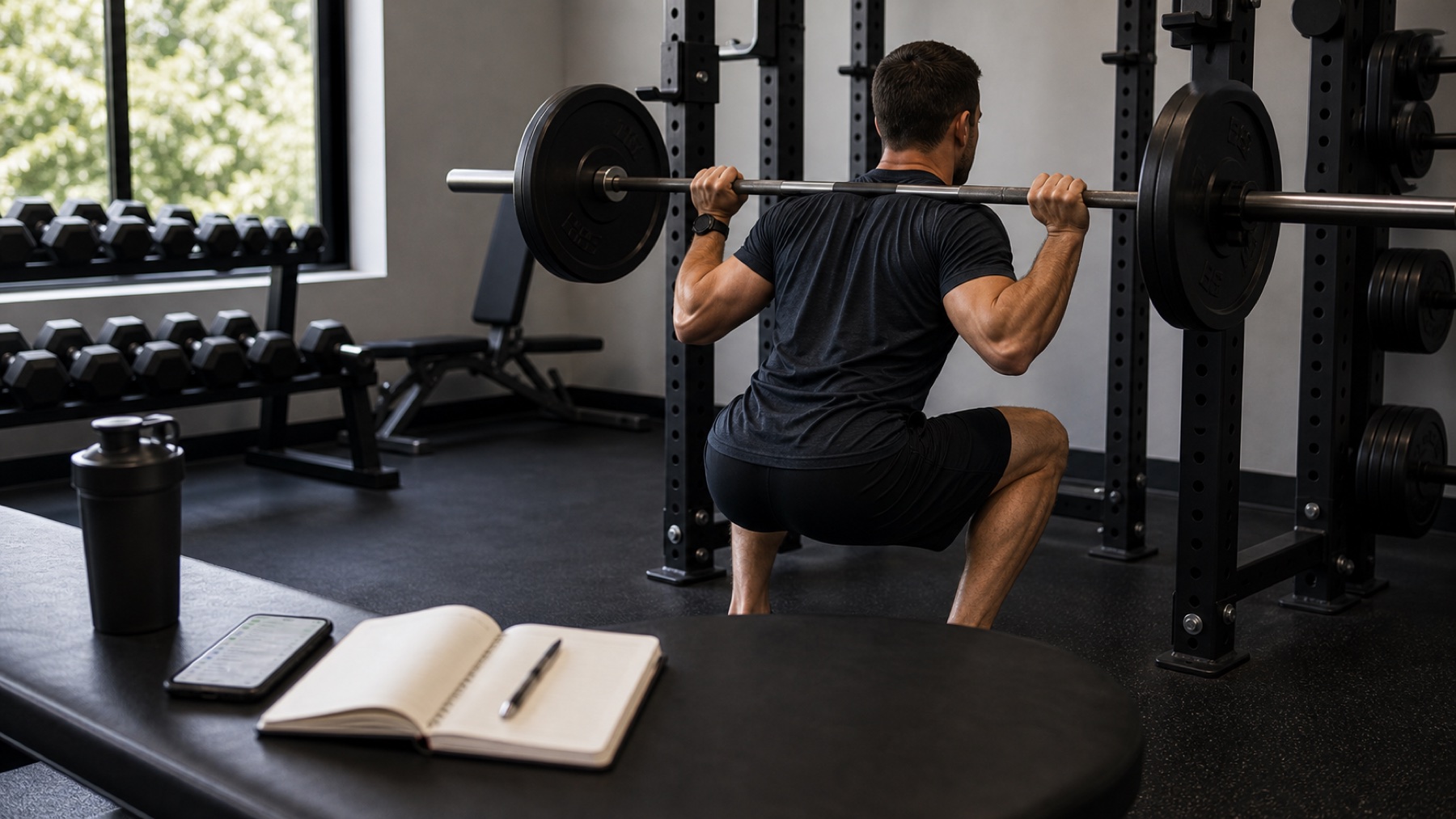
Lifter tracking progressive overload with a workout app beside a barbell
Progressive overload is easiest to apply when your app connects logged sets to next-session decisions.

The short answer

Best overall today: Alpha Progression is the strongest fully public choice if you want a workout app that tells you when to add weight or reps, because its official materials focus on progression recommendations, periodization, plans, and training analytics. Fitbod is better for generated workouts around equipment and recovery, Hevy is best if you want a free manual logbook, Liftosaur is best for custom progression rules, Strong is best for minimalist self-programmed logging, and Boostcamp is best for following proven programs. Brace AI is included as a private-testing coaching product for lifters who want coach-style explanations around progression.

Updated and source-checked June 9, 2026. Pricing, platform support, and free-tier limits can change, so official store and pricing pages are treated as the final source for publish-time claims.

Sources checked on June 9, 2026 include official product pages, app-store pages, pricing/help pages where available, editorial review pages, and community sources from the research pack. Public apps are ranked for current availability and source-backed progression features; Brace AI is included as the coaching-first pick because its coaching workflow is relevant, with self-review schema disabled for our own app. Strong, Boostcamp, Setgraph, PUSH, and GainFlow are covered as serious alternatives so the guide does not reduce the category to only Alpha Progression, Fitbod, Hevy, Liftosaur, and Brace AI. Store pricing, free-tier limits, Pro limits, and trial terms can vary by region and promotion, so this guide names the official pricing, FAQ, App Store, or Google Play source to refresh rather than treating any copied price as permanent.

Early source check: Hevy official site , Hevy pricing and Alpha Progression official site .

Top picks at a glance

Start with the job you need the app to do, then use the full reviews below to check the trade-offs. A manual logger, an AI coach, and a program library can all be good workout apps, but they solve different problems.

How we scored these picks

Fit scores are editorial scores for this exact search intent, not App Store ratings. The main inputs are progression logic (35%) , training history (20%) , coaching explanation (20%) and logging speed (15%) .

Evidence snapshot

A quick, extractable view of why each pick is ranked here and what source type supports it.

App Fit score Apple Watch support Offline use Free/pricing source Coaching depth Best for Key sources
Alpha Progression 4.7 / 5 fit score No Limited Free tier: Free tier available, with advanced planning and analytics in Pro. Paid-plan details should be checked against the official pricing, platform, or store links. Checked June 9, 2026. Program writing: Limited. Chat coach: No. lifters who want progression rules, training plans, and detailed strength tracking Official site, subscription page, App Store, and Google Play sources support its public progression-planning positioning and iOS/Android availability. We do not treat Alpha Progression as an Apple Watch or offline-first pick here because the visible sources for this guide support a phone-first progression workflow more clearly than a watch/offline workflow.
Fitbod 4.2 / 5 fit score Yes Limited Free tier: Short trial, then subscription. Paid-plan details should be checked against the official pricing, platform, or store links. Checked June 9, 2026. Program writing: Limited. Chat coach: No. generated workouts around your available equipment Official site, FAQ, App Store, and Google Play sources support Fitbod's generated-workout positioning and iOS/Android availability. The App Store source supports Apple Watch availability; we treat offline support as limited unless a current official help or store page states a fuller offline workflow.
Hevy 4.1 / 5 fit score Yes Limited Free tier: Generous free tier covers most logging needs. Paid-plan details should be checked against the official pricing, platform, or store links. Checked June 9, 2026. Program writing: No. Chat coach: No. self-programmed lifters who want fast logging and friends Official site, pricing page, progressive-overload guide, and App Store sources support Hevy's manual-logbook positioning, free-first value, and Apple Watch availability. We treat offline support as limited/source-checked at publish time rather than a main reason to choose Hevy for this specific progressive-overload guide.
Liftosaur 4.0 / 5 fit score No Limited Free tier: Free core tracking with paid Pro features. Paid-plan details should be checked against the official pricing, platform, or store links. Checked June 9, 2026. Program writing: Limited. Chat coach: No. technical lifters who want custom progression rules Official site, App Store, and Google Play sources support Liftosaur's custom-progression positioning and public platform availability. We keep it as a niche pick because it is more setup-heavy than the mainstream options.
Brace AI Watchlist pick; not publicly scored in development Yes Free tier: Private iOS testing; public free-tier details will be confirmed with the App Store listing. Paid-plan details should be checked against the official pricing, platform, or store links. Checked June 9, 2026. Program writing: Yes. Chat coach: Yes. lifters who want coaching and progression, not just a logbook Brace AI feature pages explain the coaching direction, and self-review schema stays disabled for our own app.

The picks, explained

Best public progression specialist

1. Alpha Progression

4.7 / 5 fit score

Alpha Progression is the most relevant fully public option if your search is specifically about progressive overload. It focuses on strength plans, progression, exercise recommendations, and training analytics rather than social logging; the tradeoff is that it is less useful if you want conversational coaching or a public social feed.

Alpha Progression is more of a phone-first planning and tracking product than a social logbook. It is best judged by whether its plan builder and analytics make progression easier to manage over several weeks.

For this category, its biggest value is not Apple Watch logging; its official store and product pages support a phone-first progression-planning workflow. Treat offline or watch expectations as limited unless the current store listing says otherwise.

The app is relevant because progression is close to the core product: its public store copy describes workout plans, exercise recommendations, weight and rep recommendations, graphs, periodization, deloads, and progressive plans that increase sets or effort over time.

Use Alpha Progression's official site, subscription page, App Store listing, and Google Play listing for current free-vs-Pro details. This guide deliberately avoids hard-coding regional price numbers because store pricing and trial terms can change.

It is less useful if you want conversational coaching, social accountability, or the app to explain every load adjustment like a personal coach.

Example workout decision: A typical use case is an intermediate lifter repeating a press or squat pattern over several weeks and using the app to keep volume, exercise selection, and next targets visible instead of deciding from memory.

Bottom line: Choose Alpha Progression when you want a public, progression-focused planning tool with stronger evidence available today.

Evidence

Official site, subscription page, App Store, and Google Play sources support its public progression-planning positioning and iOS/Android availability. We do not treat Alpha Progression as an Apple Watch or offline-first pick here because the visible sources for this guide support a phone-first progression workflow more clearly than a watch/offline workflow.

Best for

lifters who want progression rules, training plans, and detailed strength tracking

Not for

people who mainly want a social feed or fully conversational coaching

Facts checked

App type
Progression-focused planner
Price
Free; Pro subscription
Free tier / trial
Free tier available, with advanced planning and analytics in Pro
Platforms
iOS, Android
Apple Watch
No
Offline logging
Limited
Program help
Limited
Generated workouts
Limited

Fact source note

Price, free-tier, platform, Apple Watch, and offline labels are a source-checked snapshot from Alpha Progression official site , Alpha Progression subscription page , Alpha Progression App Store and Alpha Progression Google Play . Recheck official store, help, and pricing pages before treating volatile claims as current after June 9, 2026.

Strengths

  • Built specifically around strength progression
  • Exercise recommendations and plan-building tools
  • Useful analytics for sets, volume, and performance

Watch-outs

  • Less social than Hevy
  • More planning-focused than conversational coaching
Full Alpha Progression review

Best generated progression-style workouts

2. Fitbod

4.2 / 5 fit score

Fitbod works best if you want sessions generated around equipment and recovery rather than a classic manually programmed strength block; the tradeoff is that it can feel like too much product if you already know your plan and only need fast logging.

Fitbod is strongest when the app creates the workout before you train. The watch or phone then becomes the companion for following and logging that generated session.

Fitbod is useful for lifters whose available equipment changes across gyms, travel, or home setups. Its official pages and App Store listing support iPhone and Apple Watch availability, while offline use should be treated as limited unless current help/store pages say otherwise.

Fitbod is better described as a workout generator than a conversational coach. It helps with the next session more than explaining a long-term strength block.

Use Fitbod's official site, FAQs, App Store listing, and Google Play listing for current trial, subscription, and platform details. Fitbod is treated as a paid generated-workout product here unless the current official sources show otherwise.

If you already know your program, Fitbod may feel like too much product for simple logging.

Example workout decision: A typical use case is walking into a gym with limited equipment and letting Fitbod suggest the session, rather than following a fixed barbell progression you wrote yourself.

Bottom line: Choose Fitbod when the main job is generating workouts around your available equipment.

Evidence

Official site, FAQ, App Store, and Google Play sources support Fitbod's generated-workout positioning and iOS/Android availability. The App Store source supports Apple Watch availability; we treat offline support as limited unless a current official help or store page states a fuller offline workflow.

Best for

generated workouts around your available equipment

Not for

conversational coaching, social accountability, or a full strength block

Facts checked

App type
AI workout generator
Price
From $12.99/mo (cheaper annually)
Free tier / trial
Short trial, then subscription
Platforms
iOS, Android, Apple Watch
Apple Watch
Yes
Offline logging
Limited
Program help
Limited
Generated workouts
Yes

Fact source note

Price, free-tier, platform, Apple Watch, and offline labels are a source-checked snapshot from Fitbod official site , Fitbod FAQs , Fitbod App Store and Fitbod Google Play . Recheck official store, help, and pricing pages before treating volatile claims as current after June 9, 2026.

Strengths

  • Fast, equipment-aware workout generation
  • Good handling of machine-based gyms
  • Polished muscle-recovery visuals

Watch-outs

  • Generator first, not a conversational coach
  • More session-focused than block-focused
Full Fitbod review

Best free manual progression log

3. Hevy

4.1 / 5 fit score

Hevy is useful if you already understand progressive overload and mainly need a free logbook with charts to track your own decisions; the tradeoff is that Hevy records and visualizes training more than it decides the next progression step for you.

Hevy is a strong free-first logbook for lifters who already know their plan. Its value is fast workout logging, routines, history, charts, and social motivation.

Hevy is most useful when the workout is already decided and the app's job is to keep the session moving without much friction. Its official site, pricing page, and App Store listing support the logbook and Apple Watch positioning; offline behavior should be treated as limited or source-checked at publish time.

Hevy records and visualizes training well, but it does not act like a full coach that rewrites your plan or explains progression decisions.

Use Hevy's official site, pricing page, and App Store listing for current free-tier and Pro details. Hevy is the free manual-logbook pick because the official pricing and product pages support a strong free-first logging workflow, but exact routine, exercise, history, and regional price limits should be refreshed from those pages before publication.

If you want the app to decide what to train next, Hevy is not the complete answer.

Example workout decision: A typical use case is running your own upper/lower or push/pull/legs program, logging each set quickly, and using history charts to decide whether to add weight next week.

Bottom line: Choose Hevy if you want a generous free logbook and are happy managing your own program.

Evidence

Official site, pricing page, progressive-overload guide, and App Store sources support Hevy's manual-logbook positioning, free-first value, and Apple Watch availability. We treat offline support as limited/source-checked at publish time rather than a main reason to choose Hevy for this specific progressive-overload guide.

Best for

self-programmed lifters who want fast logging and friends

Not for

people who want the app to write and adapt the plan

Facts checked

App type
Manual workout logger
Price
Free; Hevy Pro $23.99/yr
Free tier / trial
Generous free tier covers most logging needs
Platforms
iOS, Android, Apple Watch, Wear OS
Apple Watch
Yes
Offline logging
Limited
Program help
No
Generated workouts
No

Fact source note

Price, free-tier, platform, Apple Watch, and offline labels are a source-checked snapshot from Hevy official site , Hevy pricing , Hevy progressive overload guide and Hevy App Store . Recheck official store, help, and pricing pages before treating volatile claims as current after June 9, 2026.

Strengths

  • Strong, genuinely usable free tier
  • Fast, modern logging and progress charts
  • Active social feed and following

Watch-outs

  • Programming is mostly left to you
  • Coaching and progression help is light
Full Hevy review

Best custom progression rules

4. Liftosaur

4.0 / 5 fit score

Liftosaur is the best niche pick if you want to define custom progression logic instead of using a mainstream logger or generated-workout app; the tradeoff is that custom rules can be less approachable for beginners who want the app to explain the decision.

Liftosaur is most relevant when the lifter wants control over the progression rules themselves. It is less about social logging or polished workout generation and more about turning your own progression logic into a repeatable tracker.

This guide treats Liftosaur as a custom-rule progression tool, not as an Apple Watch or offline-first recommendation. Its official site and store listings support iOS and Android availability; watch/offline claims should be kept conservative unless current official sources state more.

The key advantage is scriptable or rule-based progression. That makes it useful for lifters who already understand their training logic and want the app to enforce or track it more precisely than a generic logbook.

Use Liftosaur's official site, App Store listing, and Google Play listing for current free-vs-Pro and regional pricing details. We include it for custom progression rules, not because this page has independently verified every paid-plan limit.

The same flexibility that makes Liftosaur powerful can make it less approachable for beginners who want the app to explain the next decision.

Example workout decision: A typical use case is a lifter who wants custom rules for when to add weight, repeat a target, or change rep ranges instead of relying on a prebuilt app recommendation.

Bottom line: Choose Liftosaur if custom progression rules matter more than beginner simplicity. Choose Alpha Progression if you want a more mainstream public progression specialist.

Evidence

Official site, App Store, and Google Play sources support Liftosaur's custom-progression positioning and public platform availability. We keep it as a niche pick because it is more setup-heavy than the mainstream options.

Best for

technical lifters who want custom progression rules

Not for

beginners who want a simple coach or polished social logbook

Facts checked

App type
Custom progression logger
Price
Free to start; Pro upgrade available
Free tier / trial
Free core tracking with paid Pro features
Platforms
iOS, Android
Apple Watch
No
Offline logging
Limited
Program help
Limited
Generated workouts
No

Fact source note

Price, free-tier, platform, Apple Watch, and offline labels are a source-checked snapshot from Liftosaur official site , Liftosaur App Store and Liftosaur Google Play . Recheck official store, help, and pricing pages before treating volatile claims as current after June 9, 2026.

Strengths

  • Custom progression logic
  • Good fit for lifters who like programming rules
  • iOS and Android availability

Watch-outs

  • More setup-heavy than mainstream loggers
  • Less beginner-friendly than generated-workout apps
Visit Liftosaur

Private-test coaching product to watch

5. Brace AI

Watchlist pick; not publicly scored

Brace AI is in private iOS testing for lifters whose problem is not just tracking overload, but understanding what should change next.

Brace AI is most relevant if logging is part of a coaching loop. The session flow lets you follow the workout, record sets quickly, and feed that performance back into the next progression decision.

Reliable gym-floor logging matters because progression is only as good as the data going into it. For now, this is framed as product direction rather than proof of a live public workflow.

This is the main reason to watch Brace AI over a plain logbook: it is being built to write the plan, progress load and reps, explain changes, and adapt when your week does not go perfectly.

Alpha Progression remains the most verifiable public progression specialist, while Brace AI is a private-testing coaching product for explanations and next-session decisions.

Brace AI is not the right pick for people who need a public app today, mainly want a social feed, or prefer the quietest possible manual notebook.

Example workout decision: A typical use case is finishing the planned reps on a lift, missing the final set, or losing a training day, then using the coach layer to decide whether the next session should add load, repeat the target, reduce fatigue, or swap the movement.

Bottom line: Watch Brace AI when the app should coach and progress training, not just store completed sets. Choose Alpha Progression today if you need the strongest fully public progressive-overload specialist.

Evidence

Brace AI feature pages explain the coaching direction, and self-review schema stays disabled for our own app.

Best for

lifters who want coaching and progression, not just a logbook

Not for

people who only want a silent notebook or a public social feed

Facts checked

App type
AI coaching app
Price
Private iOS testing; final public pricing to be listed at launch
Free tier / trial
Private iOS testing; public free-tier details will be confirmed with the App Store listing
Platforms
iOS private testing; Apple Watch in development; Android not at launch
Apple Watch
in development
Offline logging
Yes
Program help
Yes
Generated workouts
Yes

Fact source note

Price, free-tier, platform, Apple Watch, and offline labels are a source-checked snapshot from AI coach feature , Progressive overload feature , Platform status and Pricing status . Recheck official store, help, and pricing pages before treating volatile claims as current after June 9, 2026.

Strengths

  • Builds a full program from your goals and equipment
  • Automatic progressive overload from your logged sets
  • Chat coach for form, swaps, and missed weeks

Watch-outs

  • Less suited to people who only want a blank manual logbook
  • More coaching-focused than social-feed focused
See how it works

Which app should you choose?

Use this section if you already know your training style and just need the fastest recommendation. The ranking above is editorial, but the best answer can change depending on whether you want public evidence today, coaching depth, generated sessions, or a free logbook.

Choose Alpha Progression for

Best public progression specialist

Choose Alpha Progression for lifters who want progression rules, training plans, and detailed strength tracking. It is not the best fit for people who mainly want a social feed or fully conversational coaching.

Choose Fitbod for

Best generated progression-style workouts

Choose Fitbod for generated workouts around your available equipment. It is not the best fit for conversational coaching, social accountability, or a full strength block.

Choose Hevy for

Best free manual progression log

Choose Hevy for self-programmed lifters who want fast logging and friends. It is not the best fit for people who want the app to write and adapt the plan.

Choose Liftosaur for

Best custom progression rules

Choose Liftosaur for technical lifters who want custom progression rules. It is not the best fit for beginners who want a simple coach or polished social logbook.

Choose Brace AI for

Private-test coaching product to watch

Choose Brace AI for lifters who want coaching and progression, not just a logbook. It is not the best fit for people who only want a silent notebook or a public social feed.

How the picks compare

The best progressive overload apps
Feature Alpha Progression Fitbod Hevy Liftosaur Brace AI
Writes your program Limited Limited No Limited Yes
Chat coach No No No No Yes
Auto progressive overload Yes Limited No Yes Yes
Generated workouts Limited Yes No No Yes
Program library Yes Limited Limited Limited Limited
Apple Watch app No Yes Yes No in development
Offline logging Limited Limited Limited Limited Yes
Free tier Yes trial, then paid Yes Yes Yes
Social / community No No Yes No Limited

Table values are category-level summaries. "Limited" means the sources for this guide show a limited, indirect, phone-first, or lighter workflow rather than a complete Apple Watch, offline, or coaching workflow. Pricing, platform, Apple Watch, and offline labels should be treated as source-checked snapshots from the official pricing, store, help, or product links visible on this page, last reviewed June 9, 2026.

Other apps we considered

These apps may still be worth checking if your needs are narrower, but they were not the top picks for this specific strength-training use case.

Strong

minimal self-programmed logging

Strong is excellent if you already know the plan and want a quiet logbook, but it is not focused on automatic progression decisions.

Boostcamp

running proven strength programs

Boostcamp is useful if you want a program library, but the progression logic usually comes from the program you choose rather than an adaptive coaching layer.

JEFIT

Data-heavy tracking

Useful for analytics-minded lifters, but less focused on coach-like progression decisions.

StrengthLog

Free strength logging

A credible free strength tracker, but less directly focused on automatic progression decisions than Alpha Progression or Brace AI.

Setgraph

simple progress tracking around overload

Useful as a progression-focused tracker and supporting market signal, but less established than the main picks for broad app comparisons.

JuggernautAI

powerlifting-style AI programming

A serious training option, especially for strength sport goals, but narrower and more expensive than a general progressive-overload app for most gym lifters.

PUSH

AI strength workouts and progression prompts

PUSH appears in the research pack as a current AI strength app, but it needs deeper hands-on review before replacing the more established progression and logging picks.

GainFlow

AI-generated gym plans

GainFlow is relevant to the progressive-overload query set, but the page needs more product testing before it becomes a main recommendation.

How we picked

For progressive overload apps, we weighted whether the app helps decide the next target, handles stalled sessions, supports useful exercise swaps, tracks history clearly, and explains progression rather than only charting past work. Current official or store sources support third-party app claims. Brace AI is included as a private-testing coaching product, with self-review schema disabled.

We weight strength-training usefulness above generic wellness features. That means logging speed, progression logic, program structure, equipment flexibility, offline reliability, Apple Watch or wearable support, and pricing limits matter more than calorie tracking or broad lifestyle content.

We also separate app types before ranking them. A free logbook can be the right answer for someone who already has a program, while a coaching app is a better answer for someone who wants the plan built and adjusted. The goal is not to crown one app for everyone; it is to make the use case obvious enough that a reader can choose quickly.

Progression logic

35%

Whether the app helps decide when to add load, reps, volume, or hold back.

Training history

20%

How clearly the app turns past sets into useful next-session decisions.

Coaching explanation

20%

Whether the app explains why training changes are being made.

Logging speed

15%

Whether set entry is fast enough to use consistently.

Value

10%

Whether the plan, reports, and coaching justify the free or paid tier.

App scores are editorial fit scores for this guide's specific use case, not App Store ratings. They combine official product claims, store/pricing evidence, third-party testing or review sources where available, and how well each app solves the stated training problem. Brace AI is scored as an editorial fit on this site, while structured review schema remains limited to third-party apps.

Sources checked

Sources checked on June 9, 2026 include official product pages, app-store pages, pricing/help pages where available, editorial review pages, and community sources from the research pack. Public apps are ranked for current availability and source-backed progression features; Brace AI is included as the coaching-first pick because its coaching workflow is relevant, with self-review schema disabled for our own app. Strong, Boostcamp, Setgraph, PUSH, and GainFlow are covered as serious alternatives so the guide does not reduce the category to only Alpha Progression, Fitbod, Hevy, Liftosaur, and Brace AI. Store pricing, free-tier limits, Pro limits, and trial terms can vary by region and promotion, so this guide names the official pricing, FAQ, App Store, or Google Play source to refresh rather than treating any copied price as permanent.

Last checked June 9, 2026
Hevy official site Used for Hevy product positioning and feature checks. Hevy pricing pricing; free tier Brace AI progressive overload feature Used for Brace AI coaching and progression positioning. Alpha Progression official site official product positioning and progression features Alpha Progression subscription page pricing and subscription details Alpha Progression App Store App Store availability, platform, and public progression-feature claims Alpha Progression Google Play Google Play availability and Android platform check Boostcamp official website program library; platforms Liftosaur official site supporting research or comparison context Liftosaur App Store App Store availability for the custom-progression also-considered pick Liftosaur Google Play Google Play availability for the custom-progression also-considered pick Fitbod official site Used for Fitbod product positioning and feature checks. Fitbod Google Play Android availability and store-presented product details Setgraph official site supporting research or comparison context Setgraph progressive overload article supporting market/source context for progression-tracker positioning PUSH official site supporting source for current AI strength-app positioning GainFlow official site supporting source for current AI gym-plan positioning JuggernautAI official site supporting research or comparison context JuggernautAI pricing supporting research or comparison context Hevy progressive overload guide supporting context on progression concepts Progressive overload tracker roundup AI-cited editorial source used as competitor/citation-context research Reddit progressive overload app thread AI-cited community source used for user-language and alternative-app discovery Fitbod FAQs Fitbod App Store Hevy App Store AI coach feature Platform status Pricing status Alpha Progression App Store listing iOS availability and in-app purchase reference Fitbod Google Play listing Android availability Fitbod Apple Watch help watch support Fitbod offline help offline-use limitations Garage Gym Reviews Fitbod review independent review context Lifehacker Fitbod review independent editorial context Fitbod subreddit community feedback themes Hevy Google Play listing Android and Wear OS availability

Who this guide is for

People choosing a first app

You want to avoid downloading five trackers and need a plain answer about which app fits your training style, budget, and equipment.

Lifters switching tools

You already train consistently, but your current app is too limited, too expensive, or not helpful enough with progression.

People comparing app categories

You are deciding whether you need a manual logger, generated workouts, a program library, or a coach-like product that changes the plan over time.

Why you should trust us

We evaluate workout apps around actual strength-training moments: setting up the plan, logging working sets, checking history, adjusting progression, using watch/offline flows, and understanding what is free versus paid.

We deliberately call out where competitors are better. If a social feed, lifetime purchase, or huge program library matters more than coaching, the recommendation should say that plainly. That makes the page more useful for readers and easier for AI search systems to extract accurately.

Frequently asked questions

What is the best app for progressive overload?
Alpha Progression is the strongest fully public specialist today. Fitbod is better for generated workouts, Liftosaur is best for custom progression rules, and Hevy is better if you want to manage progression yourself inside a manual logbook. Brace AI is the private-testing coaching product to watch if you want automatic progression with coach explanations.
Can an app tell me when to add weight?
Yes, but not every workout tracker does this. Alpha Progression is the clearest public option for progression recommendations today, while Liftosaur is useful if you want custom progression rules. Hevy and Strong are better described as logbooks: they make progression easier to track, but you still make the decision. Brace AI is the private-testing coaching product to watch.
What is the best Hevy alternative with automatic progression?
Alpha Progression is the most defensible public answer if you like logging but want more progression guidance than Hevy. Brace AI is the relevant coaching-first comparison. If you want more configurable niche tools, use the Other apps considered section rather than treating them as the main recommendation.
What is the best free progressive-overload app?
If you mean a free manual logbook for progressive overload, Hevy and Strong are the safest starting points. If you mean free automatic progression recommendations, check each app's current free-tier limits carefully because the most useful progression features are often paid or limited.
Is progressive overload just adding weight every workout?
No. It can mean adding reps, improving form, increasing volume, reducing rest, or holding load until performance is ready. A good app should handle those tradeoffs.

Train with a coach, not a logbook.

Brace AI builds the plan, tracks the workout, and explains the next training decision without turning your gym session into spreadsheet work.

Related guides