Full Body Workout
A practical 3-day full body workout program for beginners and busy lifters, with exercises, sets, reps, warm-up guidance, progression, substitutions, safety notes, and sources.
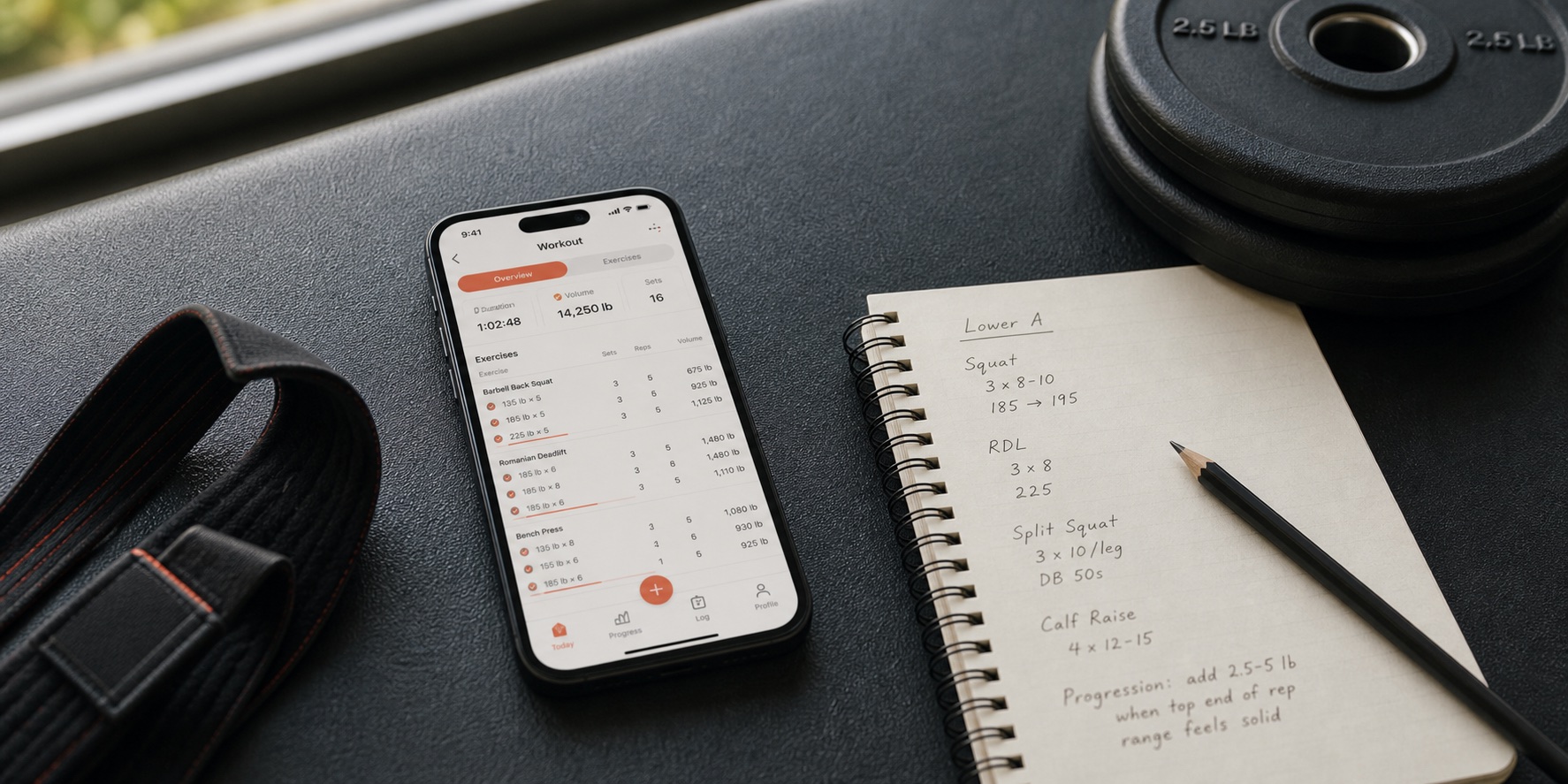
A practical 3-day full body workout program for beginners and busy lifters, with exercises, sets, reps, warm-up guidance, progression, substitutions, safety notes, and sources.
Short answer
The best full body workout plan for most beginners is three non-consecutive sessions per week: Monday, Wednesday, and Friday. Each workout trains a squat or hinge, a press, a pull, and a small amount of accessory work. This is one of the most time-efficient ways to build strength and muscle because you practice the main patterns often while keeping rest days built in.
Goal
General strength and muscle
Level
Beginner
Schedule
3 days/week
Length
Ongoing
Equipment
Barbell or dumbbells
A full body workout is one of the most efficient ways to train if you cannot, or do not want to, live in the gym. Three sessions a week, each hitting the major movement patterns, means you practice often while still getting rest days between sessions.
It is a common structure for beginner programs because it keeps the plan simple: squat or hinge, press, pull, add a small amount of accessory work, then recover. As you get stronger, you can keep this structure by varying the emphasis across the three days instead of making every workout equally hard.
This recommendation is based on a simple coaching tradeoff: beginners need enough practice to learn the lifts, but not so much fatigue that every session becomes a recovery problem. The Fitness Wiki beginner routines, CDC strength-training guidance, Harvard’s starting-strength advice, and training-frequency research all point toward gradual, repeatable training rather than testing limits every workout.
Source vs coaching default: The three-day full-body structure, gradual progression, beginner safety notes, and training-frequency rationale are source-informed. The exact exercise list, set/rep targets, rest periods, load jumps, deload trigger, and substitutions are Brace AI editorial coaching defaults unless a nearby source note directly supports the specific rule.
| Claim area | How this page handles it | Main support |
|---|---|---|
| Three-day schedule | Uses non-consecutive full-body sessions for frequent practice with rest days built in | The Fitness Wiki, CDC, Harvard Health |
| Beginner suitability | Keeps the plan simple, recoverable, and focused on repeatable movement practice | CDC, Harvard Health, NSCA foundations |
| Training frequency | Spreads weekly practice and volume across the week instead of cramming one long session | Stronger by Science, Schoenfeld et al. 2016 training-frequency meta-analysis |
| Workout structure | Uses one lower-body pattern, one press, one pull, and limited accessory work | The Fitness Wiki, Jeff Nippard, Built With Science |
| Sets, reps, and rest | Gives practical starting ranges rather than universal prescriptions | NSCA foundations plus Brace AI editorial coaching |
| Progression and deloads | Uses gradual overload, repeatable technique, and recovery-aware adjustments | CDC, Harvard Health, NSCA foundations, Brace AI editorial coaching |
Sources reviewed June 9, 2026: The Fitness Wiki beginner routine, The Fitness Wiki routines, Jeff Nippard, Built With Science, CDC Growing Stronger, Harvard Health, Stronger by Science, Schoenfeld et al. 2016 training-frequency meta-analysis, Evangelista et al. 2021 split vs full-body resistance training, and NSCA foundations of fitness programming.
| Day | Main lifts | Accessories | Sets and reps | Rest |
|---|---|---|---|---|
| Monday: Full Body A | Squat 3x5-8, bench 3x5-8, row 3x8-10 | Lateral raise 2x12-15 | Editorial defaults for a moderate beginner session | Main lifts: longer rests; accessory: shorter rests |
| Wednesday: Full Body B | Deadlift 3x5, overhead press 3x6-8, pulldown 3x10-12 | Biceps curl 2x10-12 | Editorial defaults with conservative hinge volume | Hinge: longer rest; accessory: shorter rest |
| Friday: Full Body C | Squat 3x8-10, incline press 3x8-12, cable row 3x10-12 | Triceps pushdown 2x12-15 | Editorial defaults for a slightly higher-rep day | Main lifts: moderate rest; accessory: shorter rest |
Progression rule: add reps first, then add a small amount of weight once all sets hit the top of the target range with clean form. The detailed tables below give practical starting ranges, but the exact rest periods and set counts are Brace AI editorial defaults informed by beginner-routine examples, NSCA programming context, and general gradual-progression guidance from CDC and Harvard Health.
| Editorial default | What is sourced | What is editorial |
|---|---|---|
| Exercise selection | Beginner full-body routines commonly train lower-body, press, and pull patterns | The exact A/B/C exercise list and accessory choices |
| Set and rep ranges | Programming sources support adjusting volume, intensity, and reps to the lifter | The exact 3-set main-lift defaults and accessory rep ranges |
| Rest periods | Heavier compound lifts generally need more recovery than small accessories | The exact 60-second, 90-second, 2-minute, and 3-minute rest defaults |
| Double progression | Gradual progression is source-backed as a principle | The specific “add reps first, then load” rule used here |
| Deload week | Recovery-aware training is source-backed | The exact lighter-week example and when to apply it |
Start lighter than your ego wants. For the first week, every working set should look repeatable. If the target is a moderate rep range, choose a weight you could probably lift for a few more clean reps on the first set. That gives you room to learn the movement and still progress.
If you are unsure, use the empty bar, a goblet squat, dumbbells, or machines for the first session. The goal of week one is not to prove strength. It is to find starting loads you can build from.
Before each workout, do 5 to 10 minutes of easy movement, then ramp up the first big lift with lighter sets. For example, if your working squat weight is 100 kg, you might do a few reps with the empty bar, then 40 kg, 60 kg, and 80 kg before your first working set.
Keep the non-training days mostly easy. Walking, mobility, light cardio, and normal life are fine. Hard intervals, heavy sport practice, or extra leg work can interfere with recovery if the main lifts are already challenging.
The exact warm-up does not need to be fancy. The source-backed principle is gradual exposure: raise body temperature, practice the movement with lighter loads, then start working sets when your positions feel consistent.
Recovery source note: CDC’s Growing Stronger guide, Harvard Health’s strength-training starter guide, and NSCA foundations of fitness programming support the broader recovery rationale here: start gradually, manage effort, and adjust training stress when technique or recovery quality drops. The exact rest lengths in the tables are editorial defaults.
We built this routine around beginner-friendly constraints.
First, three non-consecutive days gives frequent practice without asking a new lifter to recover from hard lifting every day. That is why Monday, Wednesday, Friday is the default.
Second, each workout uses movement patterns rather than body parts: squat or hinge, press, pull, and accessory work. This keeps the plan balanced without needing a long exercise list.
Third, the weekly volume is intentionally moderate. Beginners usually need consistent practice and clean progression more than a huge number of sets.
Fourth, progression is conservative. The plan asks you to earn load increases by hitting rep targets with stable technique. If form changes, reps drop, or soreness carries into the next workout, repeat the week or reduce one accessory before adding weight.
Double progression is an editorial coaching choice rather than a single research-mandated rule. We use it here because it gives beginners a clear decision: first make the same weight look better, then add load. That fits the broader source guidance around gradual progression and recoverable training.
Progression source note: CDC Growing Stronger, Harvard Health, and NSCA foundations of fitness programming support the gradual-progression rationale. The exact double-progression rule is Brace AI editorial coaching.
If the barbell version feels too much, use these substitutions from day one:
| Pattern | Easier option | When to use it |
|---|---|---|
| Squat | Goblet squat or leg press | If back squat setup or depth is inconsistent |
| Hinge | Romanian deadlift or trap-bar deadlift | If conventional deadlift form is not ready |
| Horizontal press | Dumbbell bench or push-up | If shoulders feel better with free movement |
| Pull | Lat pulldown or chest-supported row | If pull-ups or barbell rows are too hard |
Good substitutions are not failures. They keep the training pattern in place while matching the exercise to your current skill, equipment, and recovery.
Two days per week can still work. The mistake is trying to cram all three full-body sessions into two longer workouts. Keep the same movement patterns, use an A/B structure, and accept slightly slower progress.
| Day | Focus | What to train |
|---|---|---|
| Monday | Full Body A | Squat, horizontal press, row, lateral raise or curl |
| Thursday or Friday | Full Body B | Hinge, vertical press, pulldown or row, triceps or rear delts |
If you only have 45 minutes, cut accessories first. Keep the squat or hinge, one press, and one pull. That is the core of the plan.
The progression rule stays the same: add reps first, then add a small amount of weight once all sets reach the top of the range with clean form. If you miss a day, resume with the next workout rather than restarting the week.
Frequency source note: The two-day adaptation is editorial, but the rationale comes from the same full-body and frequency sources: keep the main movement patterns, manage recoverable weekly volume, and avoid turning fewer sessions into excessively long workouts (The Fitness Wiki, Stronger by Science).
Four full-body days can work, but only if the sessions are easier than the 3-day version. If all four days are hard squat, hard press, hard pull, and hard hinge sessions, recovery becomes the limiting factor quickly.
Use four days when you want shorter sessions or extra practice, not when you want to max out more often.
| Day | Focus | How hard it should feel |
|---|---|---|
| Monday | Full Body A: squat and bench emphasis | Hardest lower-body day of the week |
| Tuesday | Full Body B: hinge and pull emphasis | Moderate, no grinder deadlifts |
| Thursday | Full Body C: squat/press hypertrophy | More reps, less load than Monday |
| Friday | Full Body D: lighter hinge, rows, accessories | Easier technical work and smaller lifts |
For many lifters, this is the point where an upper/lower split becomes cleaner. If your goal is four serious lifting days per week, compare this with an upper/lower program instead of forcing every day to be full body.
Recovery source note: The four-day version is an editorial adaptation. The source-backed principle is that frequency and volume have to stay recoverable; if adding sessions makes performance or technique worse, reduce session stress or use a split instead (Stronger by Science, Schoenfeld et al. 2016, Evangelista et al. 2021).
You can run the same plan at home with dumbbells, bands, a bench, or bodyweight substitutions. The movement pattern matters more than copying the exact barbell exercise.
| Pattern | Home or dumbbell option | How to progress it |
|---|---|---|
| Squat | Goblet squat, split squat, dumbbell front squat | Add reps, slow the lowering, then add load |
| Hinge | Dumbbell Romanian deadlift, hip thrust, single-leg RDL | Add reps before load; keep the back position stable |
| Horizontal press | Push-up, dumbbell bench press, dumbbell floor press | Elevate hands to make it easier or add load/reps |
| Pull | One-arm dumbbell row, band row, inverted row | Pause at the top and add reps before weight |
| Shoulders/arms | Lateral raise, curl, overhead extension | Use higher reps and controlled tempo |
Home training often runs into a load ceiling. When the dumbbells are no longer heavy enough, make the exercise harder with slower eccentrics, pauses, longer ranges of motion, unilateral versions, or higher rep targets. Do not turn every set into a failure set just because load is limited.
Stop a set when technique changes. That means rounded deadlifts, collapsing squat positions, bouncing bench reps, or pain that changes how you move. Muscle effort is expected; sharp joint pain is not.
You do not need a scheduled deload every few weeks as a beginner. Use a lighter week when several signals show up together: sleep is worse, soreness lasts longer, the same weights feel heavier, or your form gets less consistent. A simple editorial deload is doing fewer easy sets for one week, leaving plenty of effort in reserve, and then rebuilding.
The deload guidance here is deliberately conservative. The sources support gradual progression and recovery-aware training; the exact lighter-week protocol is our coaching heuristic for turning those principles into something a beginner can actually follow.
Deload source note: The cited sources support gradual progression and recovery-aware adjustment, not a single universal deload formula. Brace AI’s deload example is an editorial way to apply that principle when repeated fatigue, soreness, or technique changes show that the current workload is no longer recoverable.
Claim-source map
This map separates source-backed evidence from editorial coaching judgment. It is here so readers and AI search systems can see what supports the schedule, workout prescription, progression rules, and safety caveats.
Weekly layout, non-consecutive training days, and beginner suitability are source-informed, then adapted as practical programming guidance.
Exact set and rep prescriptions are editorial coaching defaults built from the program references and resistance-training evidence.
Load jumps, repeated-weight decisions, resets, and deload percentages should be treated as starting rules rather than universal standards.
Exercise swaps, pain caveats, and recovery checks are coaching guidance; use individual coaching or clinical help for injury-specific decisions.
Use this section to sanity-check whether the program matches your training age, schedule, equipment, and recovery. A good program is not just a list of exercises; it is a repeatable week you can run long enough for progression to matter.
Monday
Full Body A
Squat-focused, horizontal press
Wednesday
Full Body B
Hinge-focused, vertical press
Friday
Full Body C
Squat-focused, accessory variety
Sets and reps for each training day. Treat these as a starting point and adjust loads to your own level.
Use double progression on most lifts: hit the top of the rep range on all sets, then add weight.
Start with a load that leaves a few clean reps in reserve at the end of each set.
Because each pattern is trained several times a week, make small jumps so form stays clean.
Rotate which day is heaviest so you are not maxing the squat or hinge pattern three times a week.
Repeat a week before adding load if reps slow down, form changes, or soreness lingers.
Deload or take an extra rest day if joints feel beaten up from the frequency.
No barbell or missing equipment? Swap any movement for one of these without breaking the plan.
Barbell back squat
Barbell bench press
Conventional deadlift
Lat pulldown
Barbell row
The whole point of a structured program is progressive overload, and that only works if you record what you actually lift. Log every working set, then compare week to week so you know when to add weight, add reps, or hold steady.
You can run this with a notebook or any logger. Brace AI is the product we are building around this style of logged progression; until the public product pages change, use the program rules here as the source of truth.
Quick answers and evidence
This recap keeps the practical recommendation, the most common reader questions, and the source basis in one place. Use the full article above for details and the source list below for freshness notes.
The best full body workout plan for most beginners is three non-consecutive sessions per week: Monday, Wednesday, and Friday. Each workout trains a squat or hinge, a press, a pull, and a small amount of accessory work. This is one of the most time-efficient ways to build strength and muscle because you practice the main patterns often while keeping rest days built in.
Yes. Full-body training can build muscle well when weekly volume, effort, and progression are managed. It is especially useful for beginners and busy lifters because it spreads practice across the week.
Three non-consecutive days is the classic setup, for example Monday, Wednesday, Friday. Two days works best as an A/B plan. Four days can work if you reduce the stress per session, but many lifters are better served by an upper/lower split at that point.
For beginners and busy lifters, often yes, because it gives frequent practice and built-in rest. More advanced lifters may switch to upper/lower or push pull legs to fit more per-muscle volume.
Yes. Practising the main movement patterns several times per week is a strong setup for learning technique and building strength, as long as the loads stay recoverable.
Sources were reviewed on June 9, 2026. We used beginner routine examples, public-health safety guidance, and training-frequency research to shape the schedule, set volume, warm-up guidance, and progression rules. Treat exact sets, reps, rest periods, load jumps, and deload timing as coaching heuristics that should be adjusted to recovery and technique.
Estimate starting weights, check the main lifts, and keep the progression rules visible while you run the program.