Skip to content
Workout app buying guide

The best workout apps for beginners

The apps that make starting easier by deciding what to train, teaching the lifts, and progressing you safely.

Will Richards
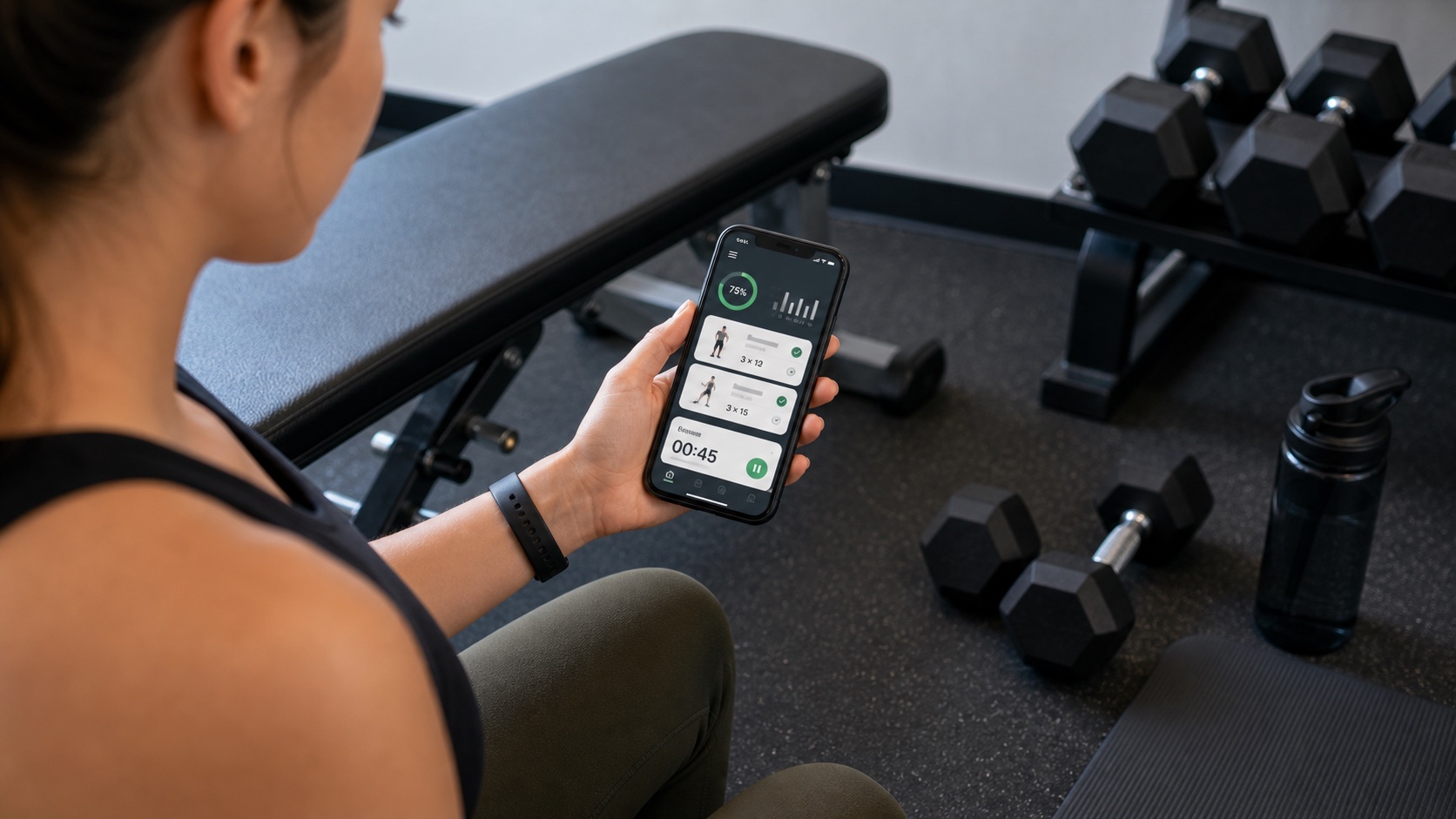
Beginner lifter checking a workout app beside dumbbells before a strength session
Beginner apps should reduce decisions, teach the pattern, and make progression feel clear.

The short answer

For beginners, Boostcamp is best for following a proven beginner program, Fitbod is best for generated starter sessions, and Hevy is the best free logger once you know your plan. Brace AI is the private-testing coaching product to watch if you want the app to build, explain, and progress the plan.

Updated and source-checked June 6, 2026. Pricing, platform support, and free-tier limits can change, so official store and pricing pages are treated as the final source for publish-time claims.

For beginner recommendations we checked app positioning, official product pages, and whether each app solves beginner-specific problems: choosing a plan, logging without confusion, learning progression, and avoiding a trial-only paywall. We also look for whether a beginner can keep using the app after the first week, when motivation is lower and the next training decision matters more than the initial setup, especially after the first missed workout or stalled lift. The best beginner app should make the next step obvious.

Early source check: Boostcamp official site , Fitbod official site and Hevy official site .

Top picks at a glance

Start with the job you need the app to do, then use the full reviews below to check the trade-offs. A manual logger, an AI coach, and a program library can all be good workout apps, but they solve different problems.

How we scored these picks

Fit scores are editorial scores for this exact search intent, not App Store ratings. The main inputs are decision support (35%) , simplicity (25%) , progression clarity (25%) and cost and access (15%) .

The picks, explained

Best public beginner program library

1. Boostcamp

4.0 / 5 fit score

Pick a proven beginner program and follow the structure instead of guessing how to build a split.

Boostcamp is excellent for beginners who trust a known program more than an adaptive coach. The biggest value is reducing the blank-page problem: instead of asking what split to run, you choose a beginner program and follow the instructions.

The downside is that program templates can still feel rigid. If the plan assumes equipment you do not have, progresses too fast, or clashes with your schedule, the beginner still has to make judgment calls.

Bottom line: Choose Boostcamp if you want a proven beginner template and are comfortable following it closely.

Best for

people who want to run established programs for free

Not for

people who want custom coaching or per-session changes

Facts checked

App type
Program library
Price
Free
Free tier / trial
Core program library and logging are free
Platforms
iOS, Android
Apple Watch
No
Offline logging
Yes
Program help
Limited
Generated workouts
No

Fact source note

Price, free-tier, platform, Apple Watch, and offline labels are a source-checked snapshot from Boostcamp official site , Boostcamp Pro page , Boostcamp free workout app page and Boostcamp App Store listing . Recheck official store, help, and pricing pages before treating volatile claims as current after June 6, 2026.

Strengths

  • Library of proven, named programs
  • Free access to most features
  • Straightforward logging on top

Watch-outs

  • Less individualized than a coach
  • Not built to adapt from your performance
Full Boostcamp review

Best for guided beginner sessions

2. Fitbod

4.1 / 5 fit score

Generates a workout around your equipment, which helps beginners who do not want to plan.

Fitbod is beginner-friendly because it answers the immediate question: what should I do today with this equipment? That is useful for new lifters who feel overwhelmed by exercise selection or train in changing environments.

Generated sessions are not always the same as a clear beginner progression. A beginner may still need help understanding why a lift changed, what a training block is doing, or how to interpret stalls.

Bottom line: Choose Fitbod if you want guided workouts quickly and do not need a deeper coaching conversation.

Best for

generated workouts around your available equipment

Not for

conversational coaching, social accountability, or a full strength block

Facts checked

App type
AI workout generator
Price
From $12.99/mo (cheaper annually)
Free tier / trial
Short trial, then subscription
Platforms
iOS, Android, Apple Watch
Apple Watch
Yes
Offline logging
Limited
Program help
Limited
Generated workouts
Yes

Fact source note

Price, free-tier, platform, Apple Watch, and offline labels are a source-checked snapshot from Fitbod App Store listing , Fitbod Google Play listing , Fitbod Apple Watch help and Fitbod offline help . Recheck official store, help, and pricing pages before treating volatile claims as current after June 6, 2026.

Strengths

  • Fast, equipment-aware workout generation
  • Good handling of machine-based gyms
  • Polished muscle-recovery visuals

Watch-outs

  • Generator first, not a conversational coach
  • More session-focused than block-focused
Full Fitbod review

Best free beginner logger

3. Hevy

4.4 / 5 fit score

Once you have a plan, Hevy is a simple, free way to track it and build the habit.

It is not the best beginner app if you still need the plan. Hevy is excellent once the program exists, but beginners who are still choosing exercises and progression rules may need more guidance.

Hevy is the best beginner logger because the free tier is strong enough to build a real habit. For a new lifter following a coach, friend, spreadsheet, or beginner program, the main job may simply be recording sets consistently.

Bottom line: Choose Hevy if you already have the beginner plan and want the easiest free place to log it.

Best for

self-programmed lifters who want fast logging and friends

Not for

people who want the app to write and adapt the plan

Facts checked

App type
Manual workout logger
Price
Free; Hevy Pro $23.99/yr
Free tier / trial
Generous free tier covers most logging needs
Platforms
iOS, Android, Apple Watch, Wear OS
Apple Watch
Yes
Offline logging
Limited
Program help
No
Generated workouts
No

Fact source note

Price, free-tier, platform, Apple Watch, and offline labels are a source-checked snapshot from Hevy official site , Hevy pricing page , Hevy App Store listing and Hevy Google Play listing . Recheck official store, help, and pricing pages before treating volatile claims as current after June 6, 2026.

Strengths

  • Strong, genuinely usable free tier
  • Fast, modern logging and progress charts
  • Active social feed and following

Watch-outs

  • Programming is mostly left to you
  • Coaching and progression help is light
Full Hevy review

Best AI coaching app

4. Brace AI

Watchlist pick; not publicly scored

Worth watching if you want beginner guidance, progression, and explanations rather than only a place to write down workouts.

Beginners rarely fail because they cannot type sets into an app. They fail because they do not know which exercises to choose, how hard to push, when to add weight, or what to do after a bad session. Brace AI is built for that coaching workflow: plan setup, explanations, progression, and next-session feedback.

Beginners who only want a known template may prefer Boostcamp, Fitbod, or Hevy. Beginners who want the coaching layer should choose Brace AI.

Example workout decision: A beginner misses the final reps on a squat day. A normal tracker records the miss. A coaching-first app should explain whether to repeat the weight, reduce volume, adjust rest, or change the next session.

Bottom line: Watch Brace AI if you want an app that explains and progresses the plan. Choose a public beginner app today if you need a download now.

Best for

lifters who want coaching and progression, not just a logbook

Not for

people who only want a silent notebook or a public social feed

Facts checked

App type
AI coaching app
Price
Private iOS testing; final public pricing to be listed at launch
Free tier / trial
Private iOS testing; public free-tier details will be confirmed with the App Store listing
Platforms
iOS private testing; Apple Watch in development; Android not at launch
Apple Watch
in development
Offline logging
Yes
Program help
Yes
Generated workouts
Yes

Fact source note

Price, free-tier, platform, Apple Watch, and offline labels are a source-checked snapshot from . Recheck official store, help, and pricing pages before treating volatile claims as current after June 6, 2026.

Strengths

  • Builds a full program from your goals and equipment
  • Automatic progressive overload from your logged sets
  • Chat coach for form, swaps, and missed weeks

Watch-outs

  • Less suited to people who only want a blank manual logbook
  • More coaching-focused than social-feed focused
See how it works

Which app should you choose?

Use this section if you already know your training style and just need the fastest recommendation. The ranking above is editorial, but the best answer can change depending on whether you want public evidence today, coaching depth, generated sessions, or a free logbook.

Choose Boostcamp for

Best public beginner program library

Choose Boostcamp for people who want to run established programs for free. It is not the best fit for people who want custom coaching or per-session changes.

Choose Fitbod for

Best for guided beginner sessions

Choose Fitbod for generated workouts around your available equipment. It is not the best fit for conversational coaching, social accountability, or a full strength block.

Choose Hevy for

Best free beginner logger

Choose Hevy for self-programmed lifters who want fast logging and friends. It is not the best fit for people who want the app to write and adapt the plan.

Choose Brace AI for

Best AI coaching app

Choose Brace AI for lifters who want coaching and progression, not just a logbook. It is not the best fit for people who only want a silent notebook or a public social feed.

How the picks compare

The best workout apps for beginners
Feature Boostcamp Fitbod Hevy Brace AI
Writes your program Limited Limited No Yes
Chat coach No No No Yes
Auto progressive overload No Limited No Yes
Generated workouts No Yes No Yes
Program library Yes Limited Limited Limited
Apple Watch app No Yes Yes in development
Offline logging Yes Limited Limited Yes
Free tier Yes trial, then paid Yes Yes
Social / community Limited No Yes Limited

Table values are category-level summaries. "Limited" means the sources for this guide show a limited, indirect, phone-first, or lighter workflow rather than a complete Apple Watch, offline, or coaching workflow. Pricing, platform, Apple Watch, and offline labels should be treated as source-checked snapshots from the official pricing, store, help, or product links visible on this page, last reviewed June 6, 2026.

Other apps we considered

These apps may still be worth checking if your needs are narrower, but they were not the top picks for this specific strength-training use case.

Strong

Beginners with a coach-written plan

Strong is clean, but it assumes the user already knows the plan and progression rules.

JEFIT

Beginners who want a large exercise database

JEFIT has breadth, but new lifters may find the database and routine-building options busier than a guided beginner flow.

How we picked

For beginners we weighted guidance most heavily: does the app decide what to train, teach correct form and progression, and avoid overwhelming a new lifter with options?

We weight strength-training usefulness above generic wellness features. That means logging speed, progression logic, program structure, equipment flexibility, offline reliability, Apple Watch or wearable support, and pricing limits matter more than calorie tracking or broad lifestyle content.

We also separate app types before ranking them. A free logbook can be the right answer for someone who already has a program, while a coaching app is a better answer for someone who wants the plan built and adjusted. The goal is not to crown one app for everyone; it is to make the use case obvious enough that a reader can choose quickly.

Decision support

35%

Does the app help a beginner choose exercises, sets, reps, progression, and what to do after missed reps?

Simplicity

25%

Can a new lifter understand the workflow without learning an advanced programming system first?

Progression clarity

25%

Does the app make it obvious when to add weight, hold steady, deload, or change the plan?

Cost and access

15%

Can a beginner start without a confusing paywall or trial-only experience?

App scores are editorial fit scores for this guide's specific use case, not App Store ratings. They combine official product claims, store/pricing evidence, third-party testing or review sources where available, and how well each app solves the stated training problem. Brace AI is scored as an editorial fit on this site, while structured review schema remains limited to third-party apps.

Sources checked

For beginner recommendations we checked app positioning, official product pages, and whether each app solves beginner-specific problems: choosing a plan, logging without confusion, learning progression, and avoiding a trial-only paywall. We also look for whether a beginner can keep using the app after the first week, when motivation is lower and the next training decision matters more than the initial setup, especially after the first missed workout or stalled lift. The best beginner app should make the next step obvious.

Last checked June 6, 2026

Who this guide is for

People choosing a first app

You want to avoid downloading five trackers and need a plain answer about which app fits your training style, budget, and equipment.

Lifters switching tools

You already train consistently, but your current app is too limited, too expensive, or not helpful enough with progression.

People comparing app categories

You are deciding whether you need a manual logger, generated workouts, a program library, or a coach-like product that changes the plan over time.

Why you should trust us

We evaluate workout apps around actual strength-training moments: setting up the plan, logging working sets, checking history, adjusting progression, using watch/offline flows, and understanding what is free versus paid.

We deliberately call out where competitors are better. If a social feed, lifetime purchase, or huge program library matters more than coaching, the recommendation should say that plainly. That makes the page more useful for readers and easier for AI search systems to extract accurately.

Frequently asked questions

What is the best workout app for beginners?
Boostcamp is the safest public pick if you want a proven beginner program, Fitbod is useful for generated starter sessions, and Hevy is best once you already have a plan. Brace AI is a private-testing coaching product to watch.
Should beginners use an AI workout app?
Yes. AI apps help beginners most, because the hardest part of starting is deciding what to train and when to progress. A good AI coach handles both while you learn the lifts.
Do I need to know how to lift before using these apps?
No. The best beginner apps include exercise instructions and progression built in. Pairing an app with our exercise guides covers both the plan and the form.
Should beginners use a workout logger or a workout generator?
Use a logger if you already have a program from a coach, friend, or trusted plan. Use a generator or coach-style app if you need help deciding exercises, sets, reps, and progression.
What makes a beginner workout app good?
A good beginner app should be easy to start, explain what to do, avoid too many choices, track progress clearly, and help you progress without turning every set into a max test.

Train with a coach, not a logbook.

Brace AI builds the plan, tracks the workout, and explains the next training decision without turning your gym session into spreadsheet work.

Related guides