Skip to content
Workout app buying guide

The best home workout apps for strength training

The apps that work best when you train at home with limited equipment, no coach on site, and sometimes weak signal.

Will Richards
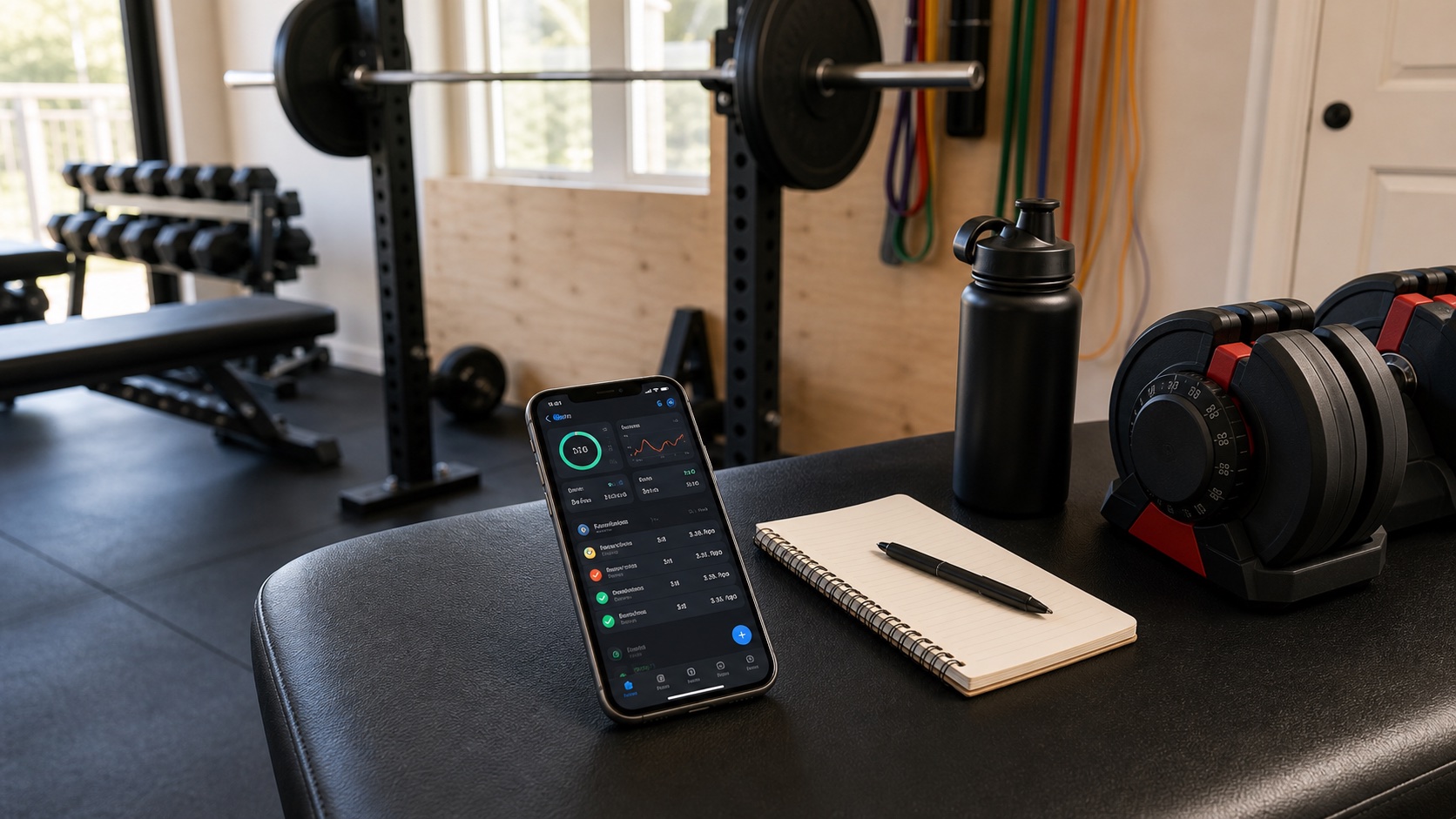
Home gym setup with a workout tracking app, adjustable dumbbells, barbell rack, and training notebook
Home workout apps need to handle limited equipment, weak signal, and solo training decisions.

The short answer

For most home and garage gym lifters, Hevy is the best free logger and Boostcamp is best if you want to follow a proven program. Brace AI is the private-testing coaching product to watch if you want equipment-aware programming and weak-signal workout logging tied to coaching.

Updated and source-checked June 6, 2026. Pricing, platform support, and free-tier limits can change, so official store and pricing pages are treated as the final source for publish-time claims.

For this guide we checked official app pages, app-store listings, and each app's public positioning around equipment selection, offline use, and home-training suitability. Public product pages are treated as the source of truth for availability and platform claims.

Early source check: Hevy official site , Boostcamp official site and Fitbod official site .

Top picks at a glance

Start with the job you need the app to do, then use the full reviews below to check the trade-offs. A manual logger, an AI coach, and a program library can all be good workout apps, but they solve different problems.

How we scored these picks

Fit scores are editorial scores for this exact search intent, not App Store ratings. The main inputs are equipment flexibility (35%) , offline reliability (25%) , programming help (25%) and value (15%) .

The picks, explained

Best public home logger

1. Hevy

4.4 / 5 fit score

If you already know your home routine, Hevy is a fast, free place to track it with charts and offline logging.

Hevy is the practical free pick for home lifters who already have a routine. If you train in a garage or basement and mostly need to record sets, compare last week's numbers, and keep a few routines ready, the free tier is unusually usable.

The tradeoff is that Hevy is still a logbook first. It is not the app that decides whether your dumbbell bench should move from 8s to 10s, whether to add a set, or how to substitute around limited equipment. That makes it best for self-programmed lifters.

Bottom line: Choose Hevy when you already own the home program and want a low-friction free tracker.

Best for

self-programmed lifters who want fast logging and friends

Not for

people who want the app to write and adapt the plan

Facts checked

App type
Manual workout logger
Price
Free; Hevy Pro $23.99/yr
Free tier / trial
Generous free tier covers most logging needs
Platforms
iOS, Android, Apple Watch, Wear OS
Apple Watch
Yes
Offline logging
Limited
Program help
No
Generated workouts
No

Fact source note

Price, free-tier, platform, Apple Watch, and offline labels are a source-checked snapshot from Hevy official site , Hevy pricing page , Hevy App Store listing and Hevy Google Play listing . Recheck official store, help, and pricing pages before treating volatile claims as current after June 6, 2026.

Strengths

  • Strong, genuinely usable free tier
  • Fast, modern logging and progress charts
  • Active social feed and following

Watch-outs

  • Programming is mostly left to you
  • Coaching and progression help is light
Full Hevy review

Best for following a home program

2. Boostcamp

4.0 / 5 fit score

Run a proven program like 5/3/1 or a dumbbell-only plan for free, without designing it yourself.

The limitation is fit. A proven program may still assume equipment you do not own, and it will not always adapt cleanly around your exact garage setup. It is stronger for people who can choose a compatible template and follow it consistently.

Boostcamp solves the home-gym problem by giving you structure before you start logging. That is useful if you would rather run a known beginner, strength, or bodybuilding program than build a plan from scratch.

Bottom line: Choose Boostcamp when you want a free program library more than personalized coaching.

Best for

people who want to run established programs for free

Not for

people who want custom coaching or per-session changes

Facts checked

App type
Program library
Price
Free
Free tier / trial
Core program library and logging are free
Platforms
iOS, Android
Apple Watch
No
Offline logging
Yes
Program help
Limited
Generated workouts
No

Fact source note

Price, free-tier, platform, Apple Watch, and offline labels are a source-checked snapshot from Boostcamp official site , Boostcamp Pro page , Boostcamp free workout app page and Boostcamp App Store listing . Recheck official store, help, and pricing pages before treating volatile claims as current after June 6, 2026.

Strengths

  • Library of proven, named programs
  • Free access to most features
  • Straightforward logging on top

Watch-outs

  • Less individualized than a coach
  • Not built to adapt from your performance
Full Boostcamp review

Best for generated home sessions

3. Fitbod

4.1 / 5 fit score

Tell it the equipment you own and it builds a session, useful when your home setup changes.

Fitbod is helpful for home training because equipment selection is central to the workflow. If you have adjustable dumbbells one day, a full hotel gym another day, and resistance bands while traveling, generated sessions can remove a lot of decision friction.

The weaker fit is long-term strength progression. Fitbod can generate useful sessions, but users who want a coach-like explanation of blocks, deloads, and lift progression may want a more coaching-first app.

Bottom line: Choose Fitbod when the main issue is generating a good workout from whatever equipment is available today.

Best for

generated workouts around your available equipment

Not for

conversational coaching, social accountability, or a full strength block

Facts checked

App type
AI workout generator
Price
From $12.99/mo (cheaper annually)
Free tier / trial
Short trial, then subscription
Platforms
iOS, Android, Apple Watch
Apple Watch
Yes
Offline logging
Limited
Program help
Limited
Generated workouts
Yes

Fact source note

Price, free-tier, platform, Apple Watch, and offline labels are a source-checked snapshot from Fitbod App Store listing , Fitbod Google Play listing , Fitbod Apple Watch help and Fitbod offline help . Recheck official store, help, and pricing pages before treating volatile claims as current after June 6, 2026.

Strengths

  • Fast, equipment-aware workout generation
  • Good handling of machine-based gyms
  • Polished muscle-recovery visuals

Watch-outs

  • Generator first, not a conversational coach
  • More session-focused than block-focused
Full Fitbod review

Best AI coaching app

4. Brace AI

Watchlist pick; not publicly scored

Worth watching if your home-gym problem is not logging the workout, but deciding what to do with the equipment you actually own.

Home gyms create a different problem from commercial gyms: the equipment list is fixed, the signal can be bad, and there is no trainer walking the floor to tell you what to swap when a movement does not fit the setup. Brace AI is built for that context: equipment-aware training, weak-signal logging, and coach-style progression.

The intended advantage is equipment-aware programming. A home lifter with dumbbells, a bench, and bands needs different exercise choices from a garage-gym lifter with a rack, plates, and cable attachment. A normal logger can store either plan, but it will not usually build or adjust the plan for that equipment.

If you mainly need a simple public logbook, Hevy, Boostcamp, and Fitbod may be the better immediate fit. Choose Brace AI when the missing layer is coaching around what to do next.

Bottom line: Watch Brace AI if your home-gym problem is deciding what to do with your equipment. Choose a public app today if you need a download now.

Best for

lifters who want coaching and progression, not just a logbook

Not for

people who only want a silent notebook or a public social feed

Facts checked

App type
AI coaching app
Price
Private iOS testing; final public pricing to be listed at launch
Free tier / trial
Private iOS testing; public free-tier details will be confirmed with the App Store listing
Platforms
iOS private testing; Apple Watch in development; Android not at launch
Apple Watch
in development
Offline logging
Yes
Program help
Yes
Generated workouts
Yes

Fact source note

Price, free-tier, platform, Apple Watch, and offline labels are a source-checked snapshot from . Recheck official store, help, and pricing pages before treating volatile claims as current after June 6, 2026.

Strengths

  • Builds a full program from your goals and equipment
  • Automatic progressive overload from your logged sets
  • Chat coach for form, swaps, and missed weeks

Watch-outs

  • Less suited to people who only want a blank manual logbook
  • More coaching-focused than social-feed focused
See how it works

Which app should you choose?

Use this section if you already know your training style and just need the fastest recommendation. The ranking above is editorial, but the best answer can change depending on whether you want public evidence today, coaching depth, generated sessions, or a free logbook.

Choose Hevy for

Best public home logger

Choose Hevy for self-programmed lifters who want fast logging and friends. It is not the best fit for people who want the app to write and adapt the plan.

Choose Boostcamp for

Best for following a home program

Choose Boostcamp for people who want to run established programs for free. It is not the best fit for people who want custom coaching or per-session changes.

Choose Fitbod for

Best for generated home sessions

Choose Fitbod for generated workouts around your available equipment. It is not the best fit for conversational coaching, social accountability, or a full strength block.

Choose Brace AI for

Best AI coaching app

Choose Brace AI for lifters who want coaching and progression, not just a logbook. It is not the best fit for people who only want a silent notebook or a public social feed.

How the picks compare

The best home workout apps for strength training
Feature Hevy Boostcamp Fitbod Brace AI
Writes your program No Limited Limited Yes
Chat coach No No No Yes
Auto progressive overload No No Limited Yes
Generated workouts No No Yes Yes
Program library Limited Yes Limited Limited
Apple Watch app Yes No Yes in development
Offline logging Limited Yes Limited Yes
Free tier Yes Yes trial, then paid Yes
Social / community Yes Limited No Limited

Table values are category-level summaries. "Limited" means the sources for this guide show a limited, indirect, phone-first, or lighter workflow rather than a complete Apple Watch, offline, or coaching workflow. Pricing, platform, Apple Watch, and offline labels should be treated as source-checked snapshots from the official pricing, store, help, or product links visible on this page, last reviewed June 6, 2026.

Other apps we considered

These apps may still be worth checking if your needs are narrower, but they were not the top picks for this specific strength-training use case.

Strong

Minimal home logging

Strong is excellent if you already have routines, but it is less helpful for choosing equipment substitutions or building a home-specific plan.

JEFIT

Exercise variety

JEFIT has a large database, but the interface and coaching angle are less focused for simple home-gym progression.

How we picked

For home training we weighted equipment flexibility, offline reliability, and whether the app can program for you without a coach present, on top of our usual logging and progression criteria.

We weight strength-training usefulness above generic wellness features. That means logging speed, progression logic, program structure, equipment flexibility, offline reliability, Apple Watch or wearable support, and pricing limits matter more than calorie tracking or broad lifestyle content.

We also separate app types before ranking them. A free logbook can be the right answer for someone who already has a program, while a coaching app is a better answer for someone who wants the plan built and adjusted. The goal is not to crown one app for everyone; it is to make the use case obvious enough that a reader can choose quickly.

Equipment flexibility

35%

Can the app build or store useful plans for dumbbells, bands, racks, benches, machines, and limited setups?

Offline reliability

25%

Can you open, log, edit, and finish a workout in a basement, garage, or weak-signal gym without losing data?

Programming help

25%

Does the app tell you what to do with the equipment you have, or only store the routine you already made?

Value

15%

Does the free or entry-level version stay useful for regular home training?

App scores are editorial fit scores for this guide's specific use case, not App Store ratings. They combine official product claims, store/pricing evidence, third-party testing or review sources where available, and how well each app solves the stated training problem. Brace AI is scored as an editorial fit on this site, while structured review schema remains limited to third-party apps.

Sources checked

For this guide we checked official app pages, app-store listings, and each app's public positioning around equipment selection, offline use, and home-training suitability. Public product pages are treated as the source of truth for availability and platform claims.

Last checked June 6, 2026

Who this guide is for

People choosing a first app

You want to avoid downloading five trackers and need a plain answer about which app fits your training style, budget, and equipment.

Lifters switching tools

You already train consistently, but your current app is too limited, too expensive, or not helpful enough with progression.

People comparing app categories

You are deciding whether you need a manual logger, generated workouts, a program library, or a coach-like product that changes the plan over time.

Why you should trust us

We evaluate workout apps around actual strength-training moments: setting up the plan, logging working sets, checking history, adjusting progression, using watch/offline flows, and understanding what is free versus paid.

We deliberately call out where competitors are better. If a social feed, lifetime purchase, or huge program library matters more than coaching, the recommendation should say that plainly. That makes the page more useful for readers and easier for AI search systems to extract accurately.

Frequently asked questions

What is the best home workout app?
Hevy is the safest free pick if you already have a home routine, while Boostcamp is best if you want to follow a proven program. Brace AI is a private-testing coaching product to watch for equipment-aware programming.
Are there good free home workout apps?
Yes. Hevy has the strongest free tier for logging, and Boostcamp gives free access to proven programs you can run at home.
Do home workout apps work offline?
Some do, but the quality varies. Brace AI is built around weak-signal workout logging, while other apps vary by how much offline behavior they document publicly.
What should I look for in a home workout app?
Prioritize equipment filtering, easy substitutions, offline logging, progress history, and a plan that fits the equipment you actually own. A home app that assumes a commercial gym can become frustrating quickly.
Is a home workout app better than a spreadsheet?
A spreadsheet can work if you already know the plan. A good app is better when you want easier logging, exercise swaps, timers, history, Apple Watch support, or progression guidance without rebuilding the sheet yourself.

Train with a coach, not a logbook.

Brace AI builds the plan, tracks the workout, and explains the next training decision without turning your gym session into spreadsheet work.

Related guides